




Future-Proofing Care
“AI might replace many jobs, but care will always need people.”
On Tuesday and Wednesday this week, thousands of young people, educators, employers and training providers gathered at the Coventry Building Society Arena, home of Coventry City F.C., for the National Apprenticeship Show West Midlands.
Across the exhibition hall, industries competed for the attention of the next generation of workers. Major brands such as Rolls-Royce Holdings showcased engineering careers, while the British Army brought one of the most immersive displays of the event, complete with simulations, interactive activities and even a live band.
Amid the buzz of recruitment stands and career pitches, one message stood out. The future workforce must also include the next generation of care professionals.
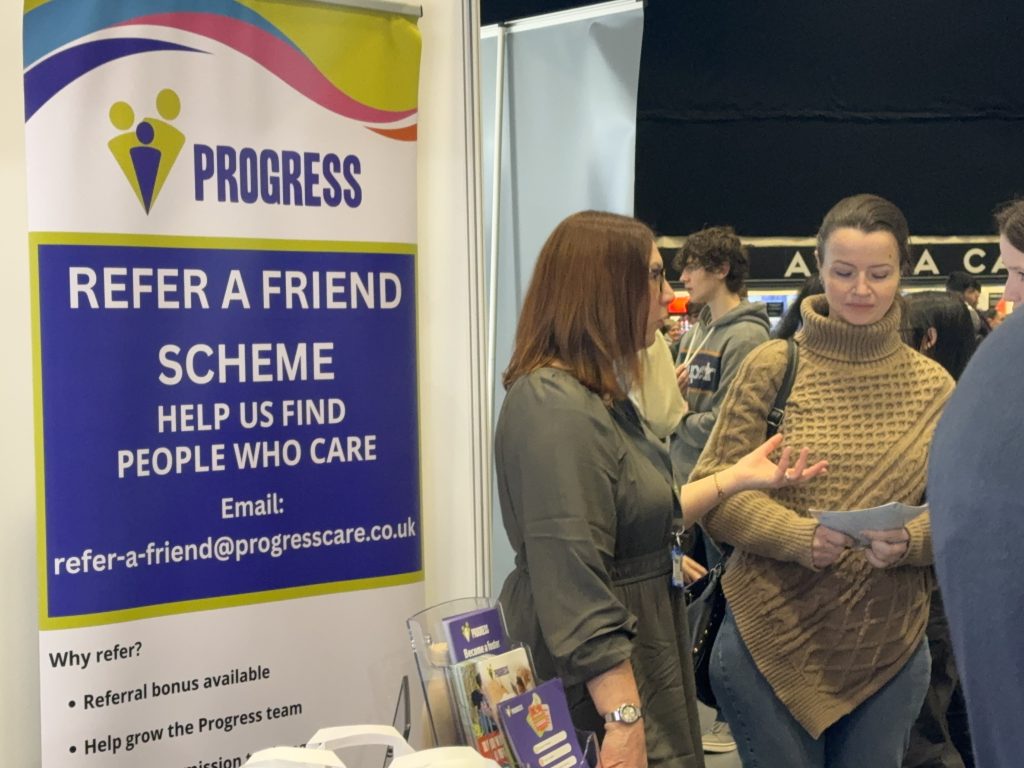
At Stand 16, opposite the National Health Service stand, Progress used the event not simply to recruit but to challenge perceptions about the care sector and to make the case that social care is one of the most future-proof careers available today.
A Career Hidden in Plain Sight
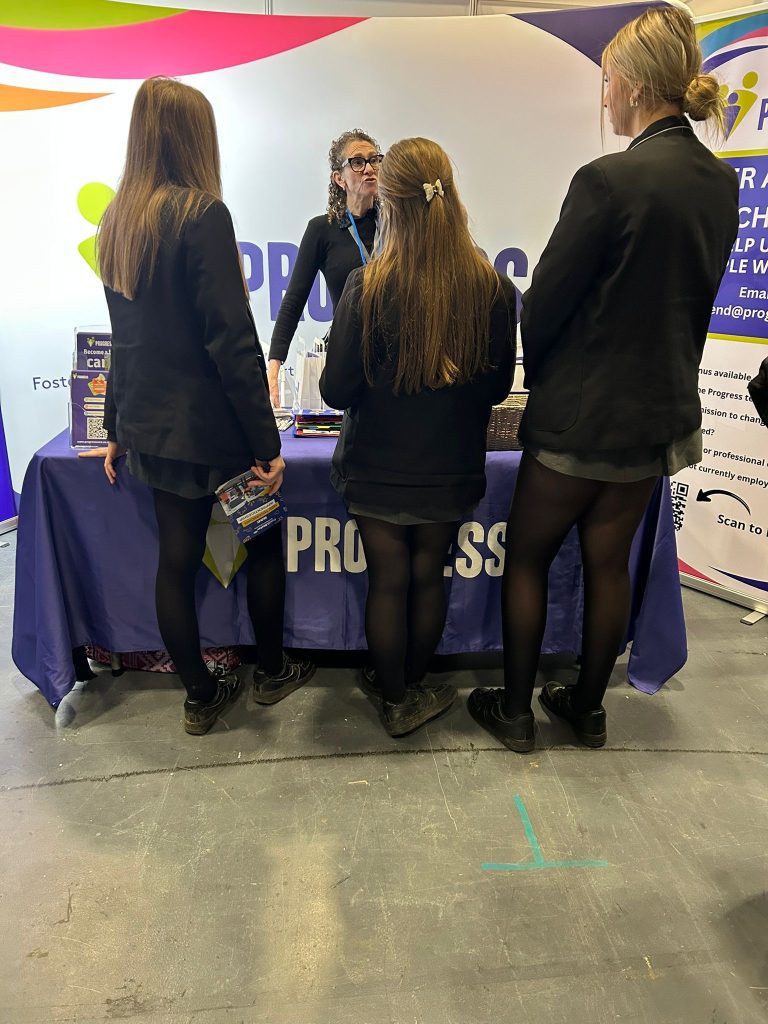
One of the biggest insights from the two-day event was how little many young people know about the care sector. Progress’ Corporate and Commercial team members spent much of the exhibition speaking with sixth-form students and GCSE pupils exploring their options.
“The biggest thing we realised,” Nic from the People and Culture team told me, “is that many young people simply don’t think about social care as a career.” For many students, care work conjures up a narrow image: supporting older people in residential settings. The sector, however, is far broader and more diverse than that.
At Progress, the work centres on supporting children and young people with complex needs, including autism, mobility challenges and other medical conditions. The role requires compassion, creativity and resilience, but it also offers something many careers cannot: the chance to make a tangible difference in someone’s life every single day.
Events like the National Apprenticeship Show are essential for raising awareness. “A lot of them don’t even realise organisations like ours exist,” a team member said. “Today is about highlighting the industry as a whole and showing them what they can actually be involved in. Supporting children, supporting young adults, and building a real career pathway.”
Breaking the Myths About Care Work
Ben, another member of the Progress People and Culture team, spent much of the event doing what he jokingly calls “selling the reality” of the sector. Care work, he explained to visitors, is often misunderstood. Many people assume the job is defined only by its most challenging aspects. The real story is far richer.
“You’re helping children have a childhood,” he said. “You’re playing games, doing activities, supporting them to communicate and grow. You’re helping them experience the things every child deserves.”
The work can be demanding, but it is also deeply rewarding. One moment Ben often shares with prospective recruits is the possibility of breakthrough moments, particularly when working with children with communication barriers.
“When a non-verbal child says their first word to you,” he said, “that’s the moment you realise how meaningful this work really is.” These experiences are what transform care work from simply a job into a vocation.

The Power of Lived Experience
Interestingly, many young people at the event already had some connection to the care sector. Some had siblings with additional needs. Others had relatives receiving care. A few even identified themselves as having special educational needs. These personal experiences often sparked deeper conversations about careers.
Nick says those with lived experience often become some of the most committed professionals in the sector. “They’ve seen what good support looks like,” she said. “And they want to be part of providing that support for others.”
For organisations like Progress, these connections highlight the importance of outreach. People who might naturally thrive in care roles need to recognise it as a viable career path.
Perhaps the most compelling argument for care as a career is its long-term stability. Across many industries, automation and artificial intelligence are reshaping the workforce. Tasks that once required human expertise are increasingly handled by machines or algorithms. Care work remains fundamentally human.
Empathy, trust, emotional intelligence and relationship-building cannot be automated. These are the core skills that underpin quality care. Ben believes this reality makes the sector one of the most resilient career choices available today.
“AI might replace many jobs, but care will always need people.”
This is also similar to what Progress’ Founder and CEO, Bal Dhanoa MBE, and our Managing Director, Claire Rogers, said about the future of AI in care and at Progress.
At the same time, demographic trends are dramatically increasing demand for care services. The UK population is ageing rapidly, with millions more people expected to require care and support in the coming decades. Improved understanding and diagnosis of conditions such as autism and ADHD also means more children and young people are being identified as needing specialist support.
Put simply, demand for skilled care professionals will continue to grow.

From Entry Role to Leadership
One of the most powerful messages shared at the exhibition was that care offers genuine career progression. Ben shared the example of a colleague who originally graduated with a media studies degree but decided against an unpaid internship and instead entered the care sector. Six years later, he had progressed to a senior leadership role earning more than £50,000 a year. Stories like this illustrate an important point. Social care is not just an entry-level job. It is a structured career with clear pathways into leadership, management and specialist roles.
At Progress, staff are supported to gain qualifications such as the Level 3 Diploma in Children and Young People’s Workforce while working. This means employees are not only earning but also building recognised professional credentials.
One subtle but revealing observation from the event was how young people imagine the world of work. Many students associate professional careers with suits, offices and rigid corporate environments. Care work offers something different. It is a dynamic, hands-on role where no two days are the same.
“You’re not sitting behind a desk all day,” Ben told visitors. “You’re active, engaging with young people, and helping them grow.”
For many students, this idea that work can be meaningful, energetic and deeply human was a refreshing alternative to traditional career paths.
Investing in the Next Generation of Care
The National Apprenticeship Show is ultimately about possibility.
For Progress, participating in the event was not simply about filling vacancies. It was about something much bigger: ensuring the long-term sustainability of the care sector. Future-proofing care means inspiring the next generation to see it as a meaningful, respected and rewarding profession.
It means showing young people that the sector offers not just employment, but purpose.
It also means ensuring that the children, young people and families who rely on care services will always have skilled, compassionate professionals supporting them.
Technology may transform many industries, but one thing remains certain. The need for care will never disappear. The challenge, and the opportunity, is making sure the next generation is ready to answer that call.

