


The Journey That Shaped the Woman I Became
This International Women’s Day, Progress’ Founder and CEO, Bal Dhanoa MBE, shares the story of her journey, traversing the long Road between duty and dream…
My story is one I hope will inspire the next generation of women to pursue their goals without boundaries.
Born in the early 1960s and growing up in the 1970s, I often reflect on what felt like one of the most vibrant eras of our time. My memories are filled with music and culture that shaped my teenage years. I remember listening to my favourite pop icons—The Osmonds, the Bay City Rollers—and watching John Travolta in Saturday Night Fever and Grease. There were discos, flared trousers, Charlie’s Angels–inspired jumpsuits, retro television sets, and dial phones. As a young teenager, I felt completely in tune with that colourful world.
Yet alongside this joyful backdrop, my upbringing carried its own complexities. As a British-born girl of Indian heritage in the first generation raised in the UK, I grew up balancing two strong cultures with very different expectations. At school, I was a typical teenager enjoying music, friendships, and discos. At home, however, I had significant responsibilities—helping my mother with household chores, caring for younger siblings, and learning the skills expected of a young woman.
In our household, girls were expected to master domestic responsibilities—cooking, sewing, and caring for family—so that one day they would make suitable wives. My own dreams as a teenager were quite different. I wanted to train as an athlete and represent Britain at the Olympics. Unfortunately, that dream was short-lived. At that time, Indian girls simply were not encouraged—nor permitted—to pursue such ambitions.
Looking back, I also recognise that our parents were navigating their own struggles. They faced racism, threats in the streets, and worked long hours in foundries and factories just to make a living. Their sacrifices were real, and their experiences shaped many of the expectations placed on us.
Marriage for me was arranged from a young age, which was common for many women at the time. It was often presented as something glamorous—an opportunity to dress up, wear makeup, and gain independence. In reality, it was very different. Becoming a young bride, living within an extended family, brought its own challenges and responsibilities that were far from the freedom I had imagined.
Education became my true path to independence. It opened doors that allowed me to pursue a career aligned with my values. Helping others had always felt natural to me, so entering the social care sector felt like the right calling.
Over the next two decades, I built my career while raising a family and navigating the cultural expectations of extended family and community. Those years taught me resilience, adaptability, and determination—skills that would shape my journey over the next four decades.
Yet having a stable career in social care was never enough for me. I wanted to make a bigger difference. I wanted to change lives and provide better support for families struggling with poverty and limited services for their children. My first step was to set up school holiday provisions for children, giving parents support while offering young people a safe space where they could simply be themselves.
Alongside my full-time work as a social worker, I took on many voluntary roles throughout the 1980s and 1990s, supporting families and communities. During this time, I held several positions within the care sector and was fortunate to be supported by strong female managers and leaders who believed in me and encouraged my growth.
Through my voluntary work, I gained real insight into the lack of resources across local authorities. At the same time, my university research and thesis provided evidence of the gaps that needed addressing. With the Children Act 1989 providing a new framework for change, I began to shape a clear vision of what could be done.
After completing university, my vision became clearer—but the challenges ahead were even greater. In my mid-thirties, with young children and a full-time career, I began planning the next step of my journey. I decided to establish my own specialist fostering provision. To make it happen, I took a huge financial risk, even putting my own home on the line.
I had a clear focus, a vision, and a plan—and failure was not an option.
My days and nights merged as I balanced family life, career responsibilities, and financial pressures. I recruited, trained, and assessed my first group of foster carers. Looking back, that moment remains one of the proudest of my life. Despite the doubts, the challenges, and the negativity I encountered, I had created something meaningful.
Late nights were spent writing policies and procedures, ensuring our services met the standards required by regulatory authorities. At the same time, I faced another challenge: being a woman in what was very much a man’s world. In meetings with directors, I was often dismissed as “the social worker,” despite having the qualifications, skills, and leadership required to stand as their equal.
The first decade of building Progress brought enormous challenges—but it also strengthened my determination.
During those years, I was balancing many roles: professional, mother, wife, and carer to a disabled sibling. The demands were relentless, and I learned the art of multitasking at a completely new level. There was simply no turning back—too much had been invested, and too much was at stake. As Margaret Thatcher once said, “This lady’s not for turning.”
Looking back over more than forty years, I recognise that resilience and determination have been the driving forces behind my journey. My mission has always been to build services that deliver excellence in care while empowering other women to step into leadership roles. I have always believed in supporting women to gain education, qualifications, and meaningful careers.
While setting up services came naturally to me, running a business brought its own lessons. In those early years, I was often so focused on the work ahead that I rarely stopped to look up and reflect. Leadership required constant learning, navigation, and resilience.
Today, when I reflect on my journey, I feel incredibly grateful for the opportunities I have had—and for the people who stood beside me, encouraging and supporting me along the way.
To women considering starting a business in their chosen field, my advice is simple: develop the right skills, create a clear plan, and surround yourself with people who share your passion and vision. Leadership can sometimes feel lonely, but resilience and teamwork make all the difference.
As I conclude my story, I reflect on the many challenges I have faced—balancing family life, cultural expectations, and the pressures of leadership. Like many women, I have lived with “mum guilt” while striving to achieve professional goals.
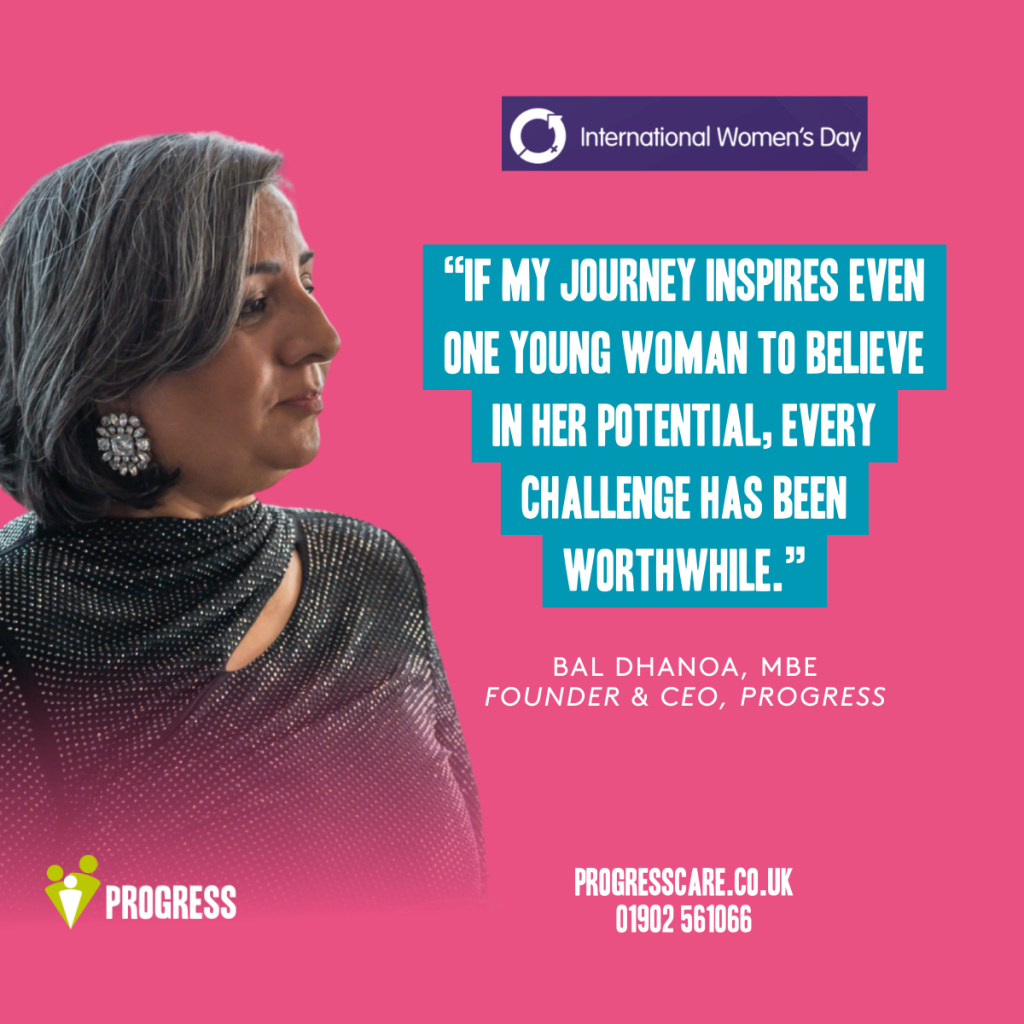
Yet today, I feel a deep sense of purpose. If my journey can inspire even one young woman to believe in her potential, then every challenge has been worthwhile.
I feel truly blessed to have had the opportunity to serve those I care deeply about in our society and to provide meaningful careers for so many women who have joined us on the Progress journey over the years.
Above all, I believe this: anything is possible if you trust in yourself.
Happy International Women’s Day