



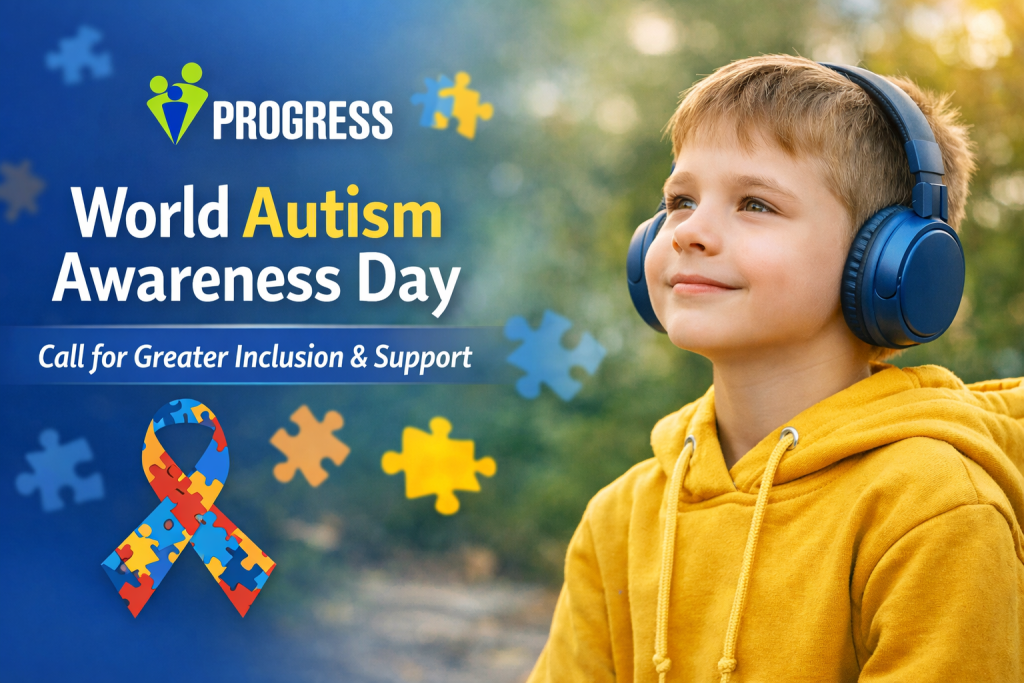
Progress Marks World Autism Awareness Day with Call for Greater Inclusion
Social care provider, Progress Care Solutions, is marking World Autism Awareness Day by highlighting the importance of inclusive, person-centred support for autistic people and their families across the UK.
Observed globally on 2 April, World Autism Awareness Day was established by the United Nations to promote understanding of autism and improve the quality of life for people on the spectrum so they can participate fully in society.
In the UK, autism affects around 700,000 people — more than 1 in 100 individuals. When families are included, autism touches the lives of an estimated 2.8 million people across the country. Despite growing awareness, many autistic people still face significant barriers in everyday life — from accessing diagnosis and tailored education to finding meaningful employment and community inclusion.
Only around 30% of autistic adults in the UK are in paid employment, one of the lowest employment rates among disability groups. Meanwhile, demand for diagnostic assessments continues to grow, with NHS data showing rising referrals and increasing waiting times for autism assessments across England.
For organisations like Progress, these statistics reinforce the need for services that not only support individuals but also recognise and celebrate neurodiversity.
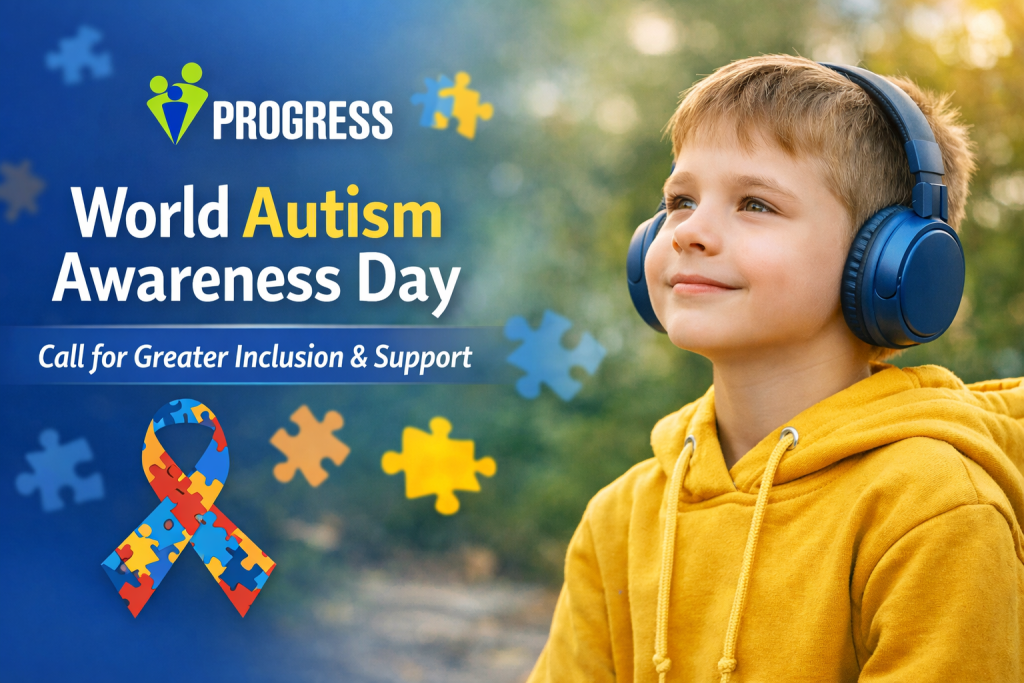
Supporting autistic people to live fulfilling lives
Autism Spectrum Condition (ASC) is a neurodifference that affects an individual’s social interaction, communication, and behaviour. It is a spectrum condition because it affects individuals in different ways and to varying degrees.
Autistic individuals may have challenges understanding social cues, such as body language and facial expressions, and communicating effectively with others. They may also engage in repetitive behaviours or have more narrow interests.
ASC is a lifelong neurodifference that is typically diagnosed in early childhood, although some individuals may not receive a diagnosis until later in life. It is estimated that around 1 in 100 people in the UK are autistic. Whilst more males are diagnosed with autism than females, the number of females being diagnosed is steadily growing as awareness of autistic traits amongst girls and women increases.
With the right support, autistic individuals can thrive in education and work, maximising their strengths and developing strategies to address challenges they may experience.
Through its specialist services, Progress works closely with individuals, families, and local authorities to provide person-centred care that promotes independence, wellbeing, and meaningful life opportunities.
This includes:
- Supporting individuals with autism and additional needs in residential and supported living environments
- Creating autism-friendly environments that respect sensory needs and routines
- Working collaboratively with families, professionals, and local authorities
- Encouraging skill development, confidence, and community participation
Claire Rogers, Managing Director, Progress Care Solutions said:
“World Autism Awareness Day is an opportunity to recognise the strengths, talents and potential of autistic people while also acknowledging the challenges many still face.
At Progress, we believe that with the right understanding and support, every individual can thrive. Our focus is on providing compassionate, person-centred care that enables people to live fulfilling and independent lives.”
Moving beyond awareness to inclusion
While awareness of autism has improved significantly over the past two decades, experts increasingly emphasise the importance of acceptance, accessibility and inclusion.
Across the UK, many autistic people and their families continue to navigate long waiting times for diagnosis, gaps in education support, and limited employment opportunities. Recent surveys have also highlighted challenges in mainstream schools, where autistic pupils often experience higher levels of absence due to anxiety or unsuitable learning environments.
For Progress, meaningful change requires a collaborative approach involving care providers, policymakers, educators, and communities.
By promoting understanding and providing specialist support services, organisations like Progress aim to help create communities where autistic people are valued, supported, and empowered to achieve their goals.
As the world marks World Autism Awareness Day, Progress is encouraging individuals and organisations alike to take simple steps that make a difference — from improving understanding of autism to creating more inclusive workplaces and communities.