

How James Found His Place in Care at Progress

I never thought I’d be in care. But if you don’t give it a go, you won’t know. 

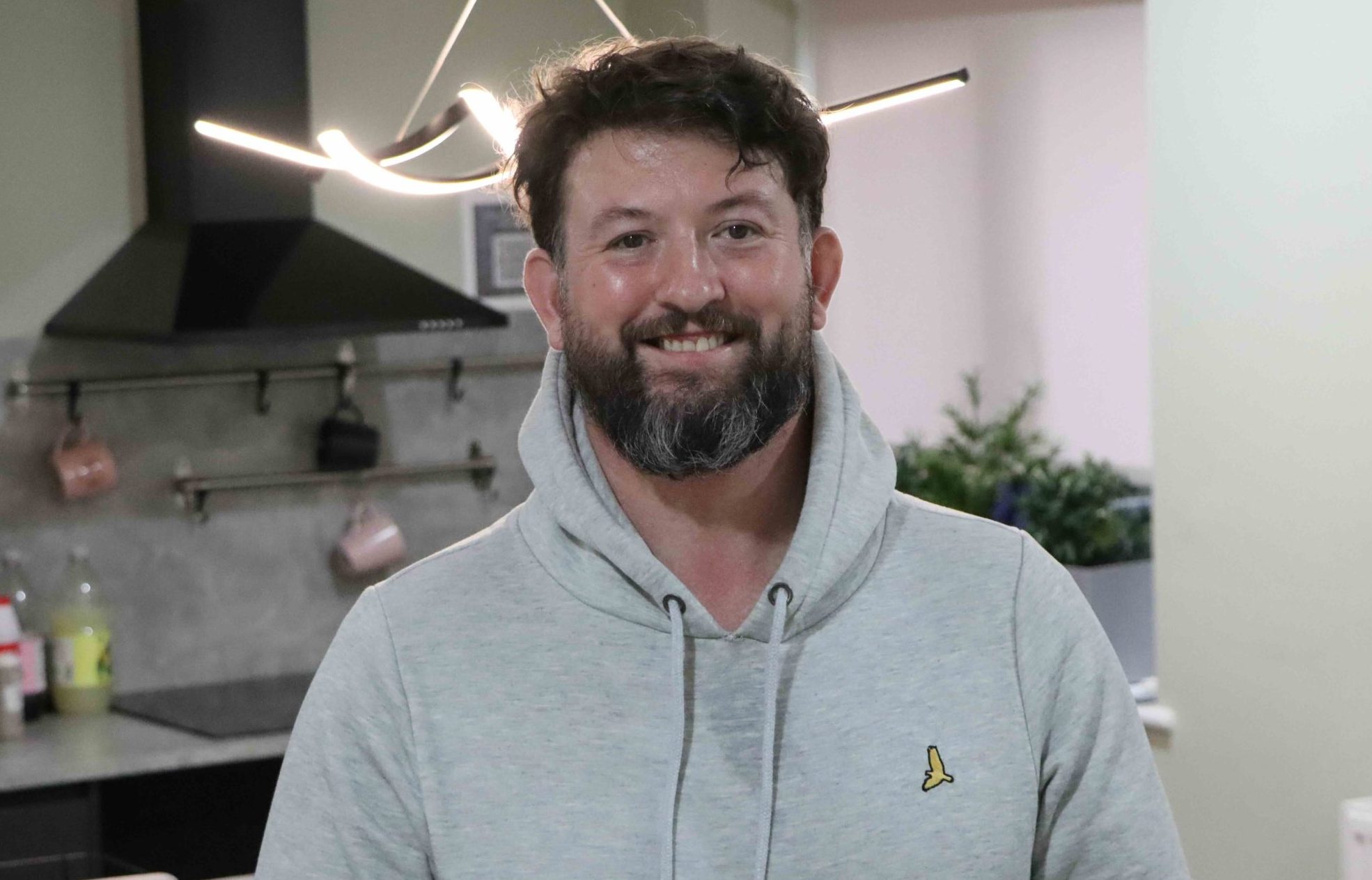
When James talks about work, he doesn’t start with job titles. He starts with people.  For 25 years, his career lived in sales and customer service—banks, telesales, property management, social media. Roles that demanded patience, persuasion and, above all, an ability to read the person in front of him. Trustworthiness mattered. Reliability mattered. Treating people as individuals mattered most of all. What didn’t seem to fit, at least not on paper, was care. 

“For years, people kept saying to me, ‘You’d be good in care,’” James says. He always brushed it off. Sales suited him. Customer service felt familiar. And there was one thing he couldn’t quite get past: personal care. “That was the massive thing for me,” he admits. It felt like a line he wasn’t sure he could cross.  So he kept going. Long hours. New roles. Same people-facing work. Then, at a job fair in Molineux Stadium in Wolverhampton, something shifted. 

James wasn’t there looking for career opportunities in care. He wandered past stalls on internet security, imagining himself there quite comfortably. And then he turned and saw Progress. Louise and the rest of the team from Progress were standing there. Care, again. It seemed to keep appearing at moments of change in his life. 

“I must have looked puzzled,” he laughs. Louise noticed and asked the question James had been dodging for years: had he ever thought about working in care? 

He was honest. Kind of. But the personal care aspect had always put him off.  Louise didn’t push. She simply suggested he give it a go.  That was it. No grand speech. No pressure. Just permission to try. James wanted something different. After decades in customer service and sales, he was ready for a new challenge—one that still involved people, but in a more meaningful way. He wanted flexibility. He wanted something he could stay with. Something that felt rewarding, not just financially, but personally.  Care, he realised, might be that thing. 

His first day at Progress came with nerves. He started on 8 December, walking into induction at the Head Office apprehensive, unsure what to expect. Those nerves didn’t last long. “The staff were lovely,” he says simply. “The building is great. Such a nice place to have.” What stood out most was how visible leadership was. Claire, the Managing Director, was there delivering parts of the training herself. It made an impression. This wasn’t a distant organisation. It felt present. The very next day, James was in someone’s home. 

“That was intimidating,” he admits. “But it happened.” 

He wasn’t thrown in at the deep end. The first shifts were about watching, listening, learning the environment, understanding the person he was supporting and the colleagues alongside him. He learned how behaviours could shift, what might trigger them, what might soothe them. He learned that care isn’t just about tasks—it’s about awareness. One of the young adults James supports has complex needs. At first, the complexity felt like a lot to process. But then James reframed it, the way he always has with people. 

“You start thinking about what issues they’ve had in their life,” he says. “And then you think, how can I help?” 
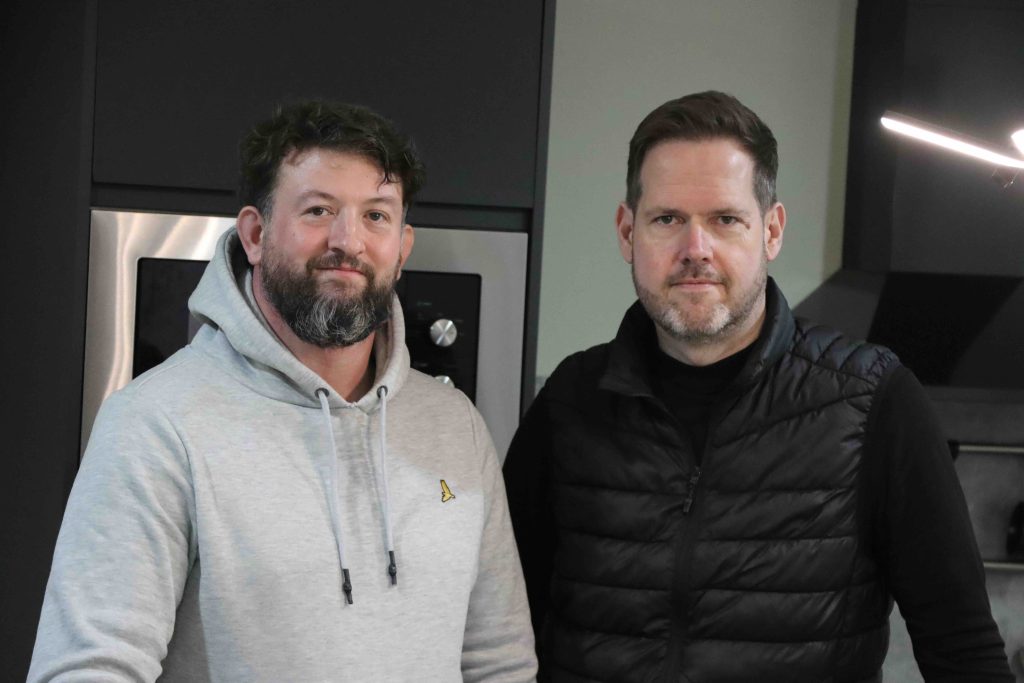
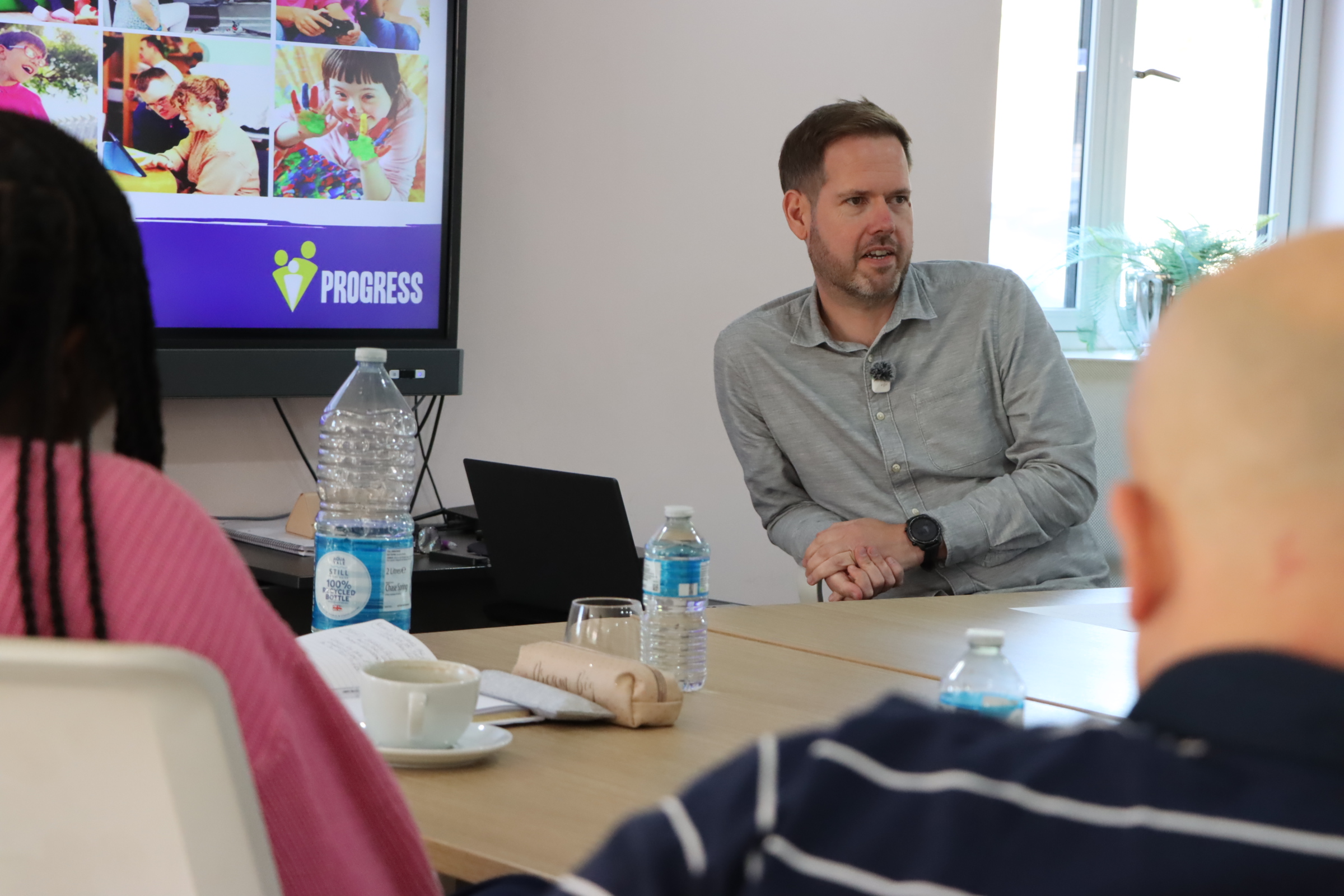
James and Phil, head of Adult Services, Progress

That question now guides him into every shift. “How can I make this person’s day better?” Sometimes that looks like supporting daily activities. Sometimes it’s going out—to Dudley, for example—trying to keep up with someone who moves much faster than you do. Sometimes it’s snowball fights. Sometimes it’s simply being present. 

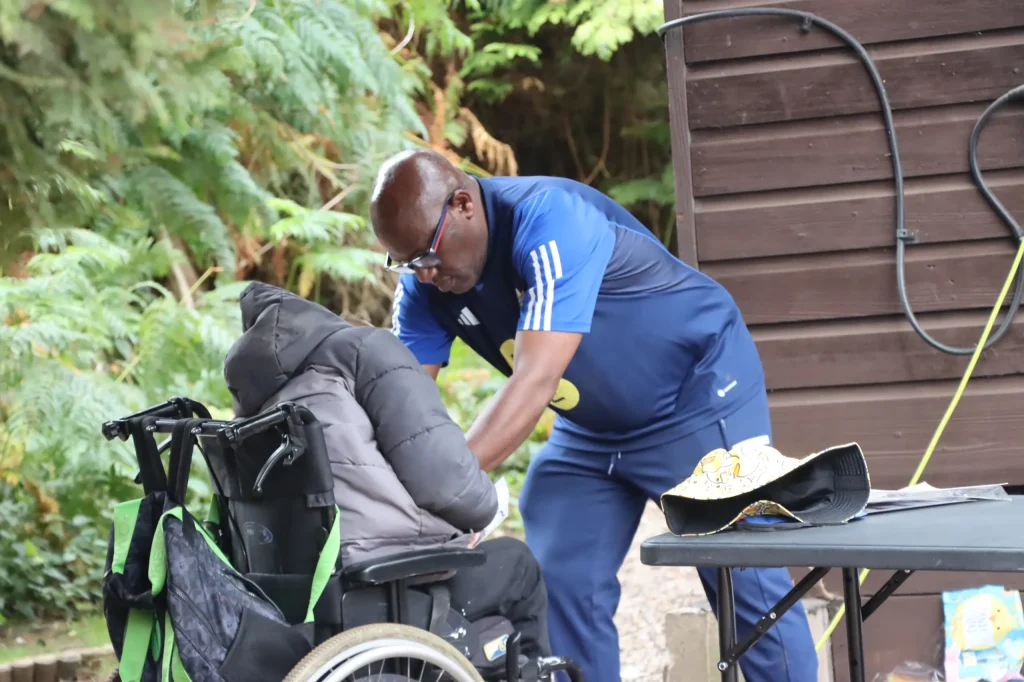
Not everyone James works with is verbal. That brings a different challenge: learning how to communicate care without words. A gentle touch on the shoulder. A calm presence. Small gestures that say, I’m here, you’re safe. There are moments that stay with him. One service user, in a wheelchair, greets him loudly and joyfully—“Hi! Hello, trouble!”—and dances whenever music comes on. At Progress Christmas Party, the joy was infectious. Another moment caught James off guard more quietly: after only three visits, that same person greeted him by name. 

“That touched me,” he says. “He knows my name already.” 

It’s in those moments that James feels the difference he’s making—and the difference the job is making to him. Care isn’t easy. The hours can be difficult. The needs are complex. Patience is essential. There’s repetition, unpredictability, emotional weight. But James doesn’t shy away from that.  “You’ve got to be focused on the individual,” he says. “You’ve got to be patient. Loyal. Respectful.” 

He sees care as an extension of everything he’s done before. Managing people’s lives, in many ways, isn’t so different from managing teams or handling complaints—it just carries far greater responsibility. The skills transfer. The stakes are higher. Training has been intense, but James welcomes it. He’s tech-savvy, comfortable with computer-based learning, and he understands why the foundation matters. Safeguarding. Medication. Fire safety. Epilepsy. Autism. Each course adds another layer of confidence. 

Recently, he was signed off to administer medication. The first time doing it alone was daunting. “You’ve got to be on your game,” he says. “A tiny mistake can have a massive effect.” He’s developed his own careful process, backed by the knowledge and support of colleagues, mentors and managers who encourage questions rather than discourage them. 

“I ask loads of questions,” he laughs. “And they always reply.” 

That support has made all the difference. James feels trusted, prepared, and backed to succeed. 

One month in, he doesn’t see this as a stopgap or a trial run. He sees a future. He wants to progress within Progress—maybe into a team leader role, maybe into management. He wants to build a career that matters.  Not just for the pay, but for the reward of knowing he’s helped give someone a better life. 

“I never thought I’d be in care,” James says. “But if you don’t give it a go, you don’t know.” 

Now he does. And he’s glad he stopped at that stall.

Progress has rewarding career opportunities. Visit progresscare.co.uk/jobs for the latest career opportunities.
How Apprenticeship Shaped My Leadership Path

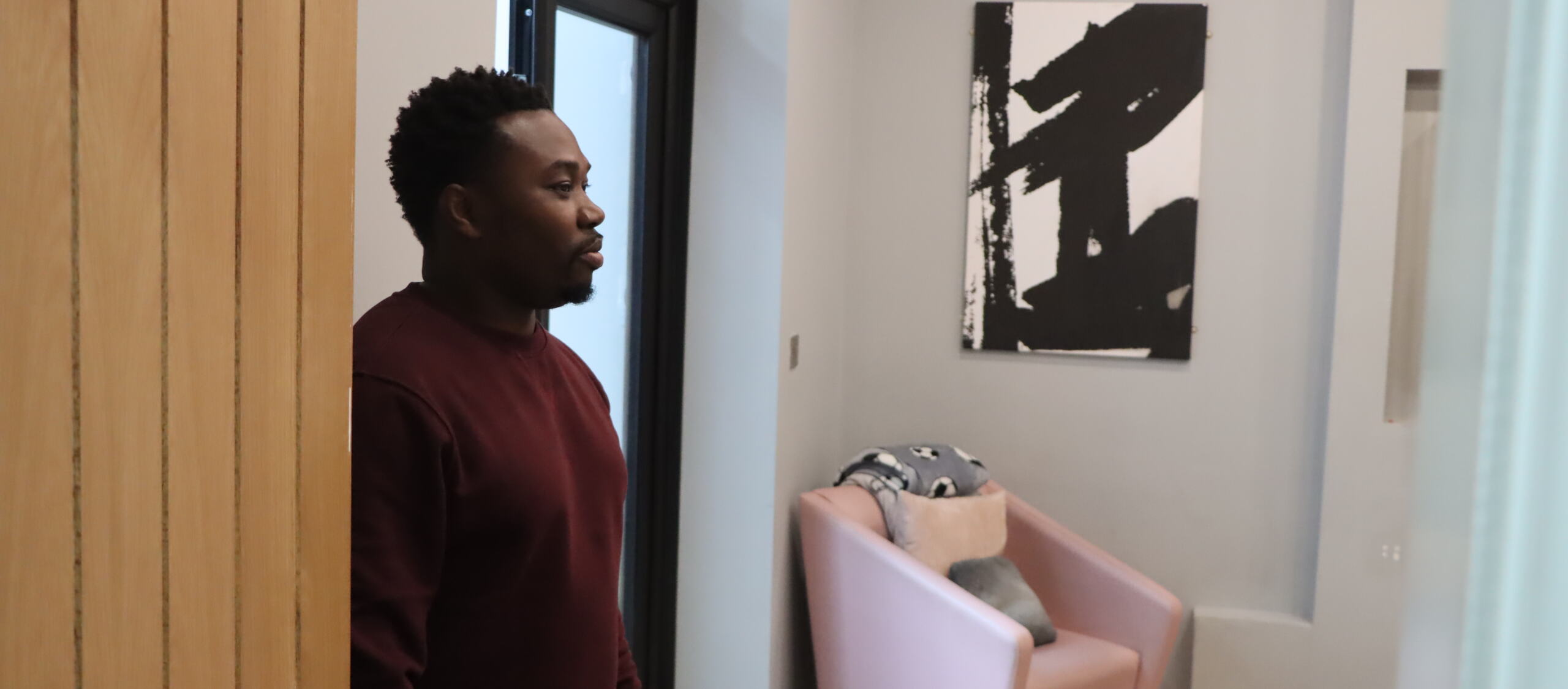
I have always believed that development should be intentional. For me, progressing in my career wasn’t just about stepping into new roles, it was about making sure I had the knowledge, qualifications, and confidence to lead effectively and support others to grow. 

I joined Progress Care Solutions as a Deputy Manager, having already completed my Level 3 qualification. From that point, pursuing Leadership and Management training felt like a natural next step. Whether or not a management role came immediately, I knew achieving my Level 5 was important, both for my professional growth and for my ability to contribute meaningfully to the service. Supporting a manager requires more than experience alone; it requires understanding, reflection, and the right tools to lead. 

The apprenticeship journey provided exactly that. Starting from the foundation level and building knowledge over time allowed me to measure my progress and see how far I had developed. Through reflective exercises, competency assessments, and personal development planning, I was able to identify my strengths, recognise areas for improvement, and set clear goals for growth. These structured milestones made the learning practical and relevant to my day-to-day role. 


One of the most valuable aspects of the experience was the support network around it. Having access to assessors and mentors—individuals who had completed the programme themselves—created a strong system of guidance and accountability. That support ensured I stayed on track and could apply what I was learning directly into practice. 

The impact on my leadership has been significant. The training strengthened my professional capabilities, deepened my understanding of leadership theory, and equipped me with tools for managing teams and navigating complex situations. I now embed reflective approaches into daily practice, encouraging teams to learn from incidents, resolve challenges constructively, and continually improve. It has also broadened my awareness of legislation, safeguarding expectations, and sector developments, ensuring that my decision-making is informed and responsible. 

Today, as Manager at Portland House, I apply these insights every day; whether managing conflict, supporting staff development, or guiding the team through complex care situations. The apprenticeship helped bridge research and practice, allowing me to translate theory into meaningful action that benefits both staff and the young people we support. 

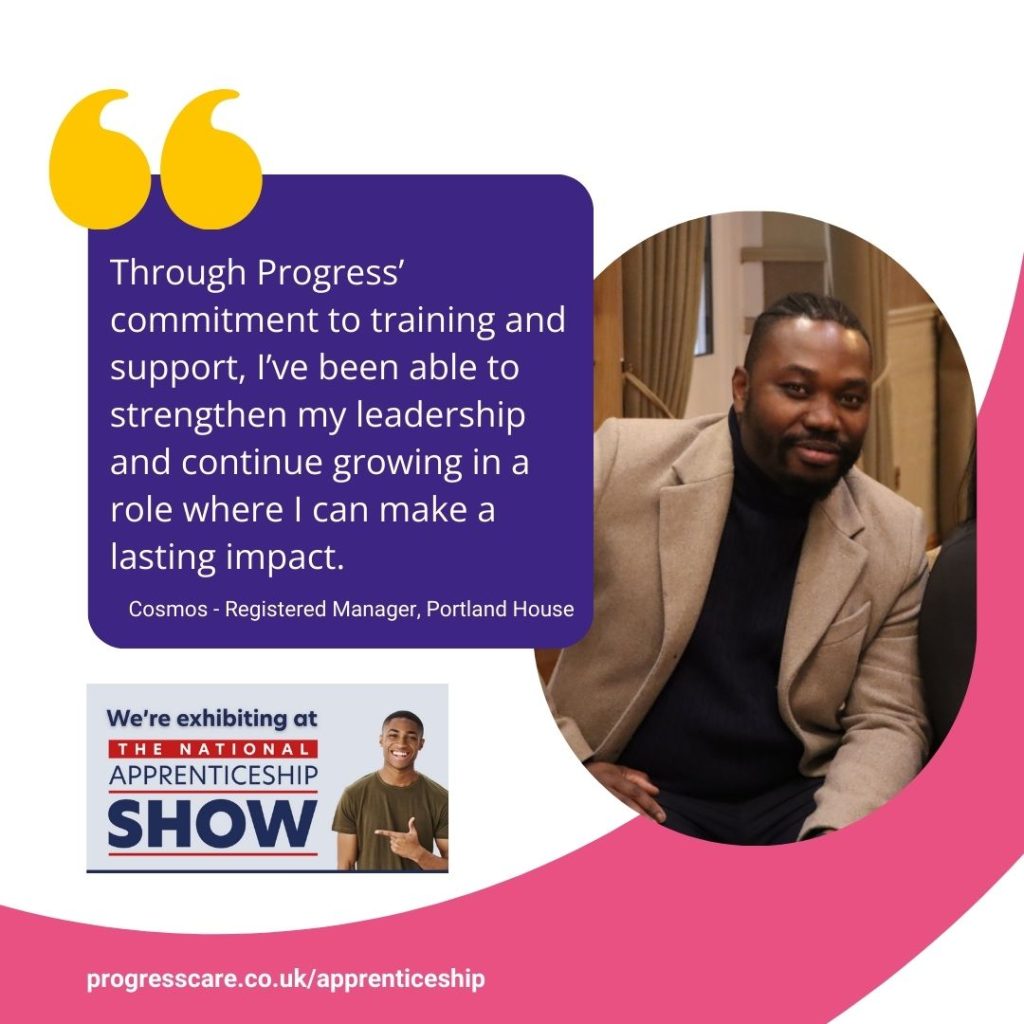
My journey reflects the value of continuous learning. Professional development is not just about achieving qualifications, it’s about building confidence, capability, and perspective. Through Progress Care Solutions’ commitment to training and support, I’ve been able to strengthen my leadership and continue growing in a role where I can make a lasting impact. 

Learning. Leading. Progressing.

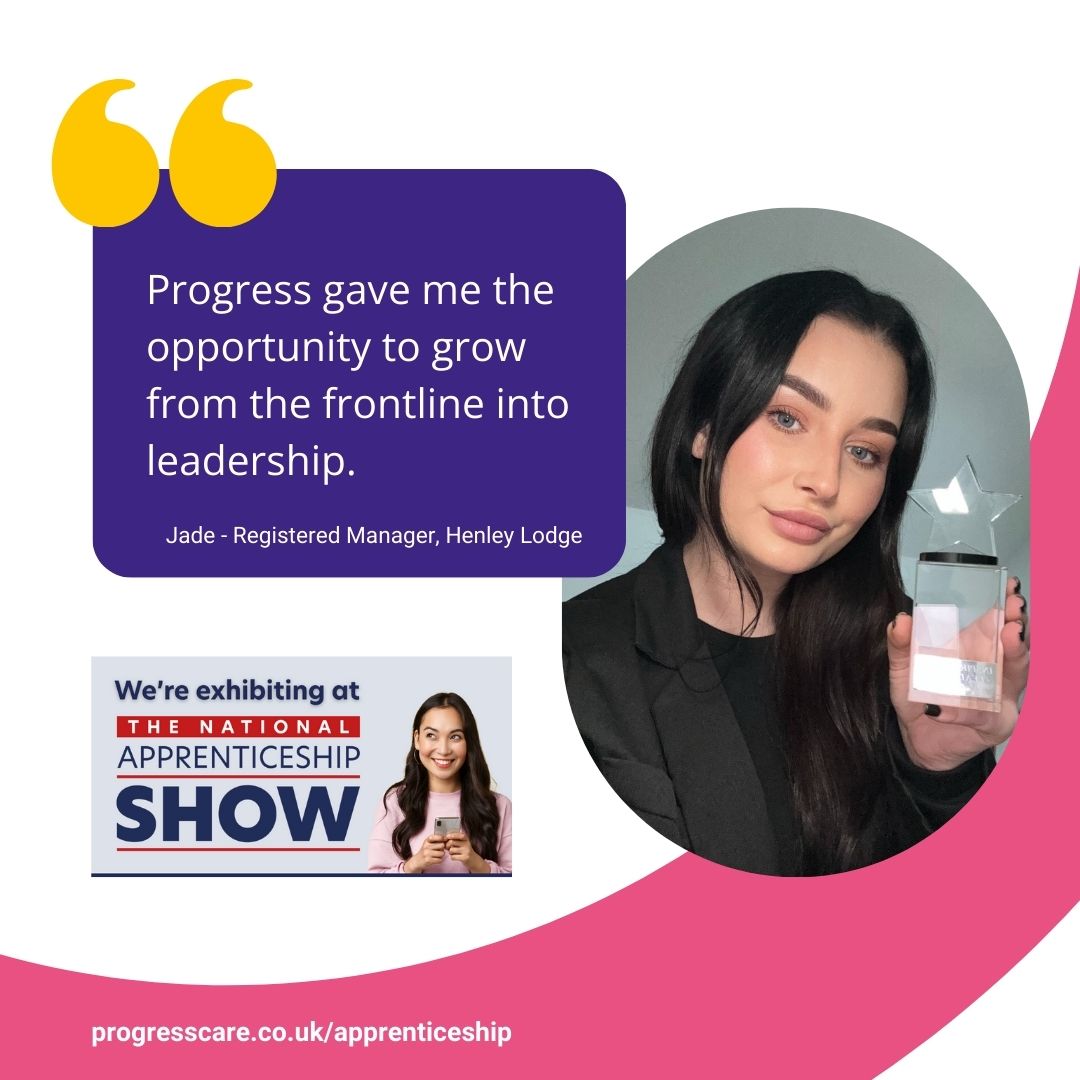
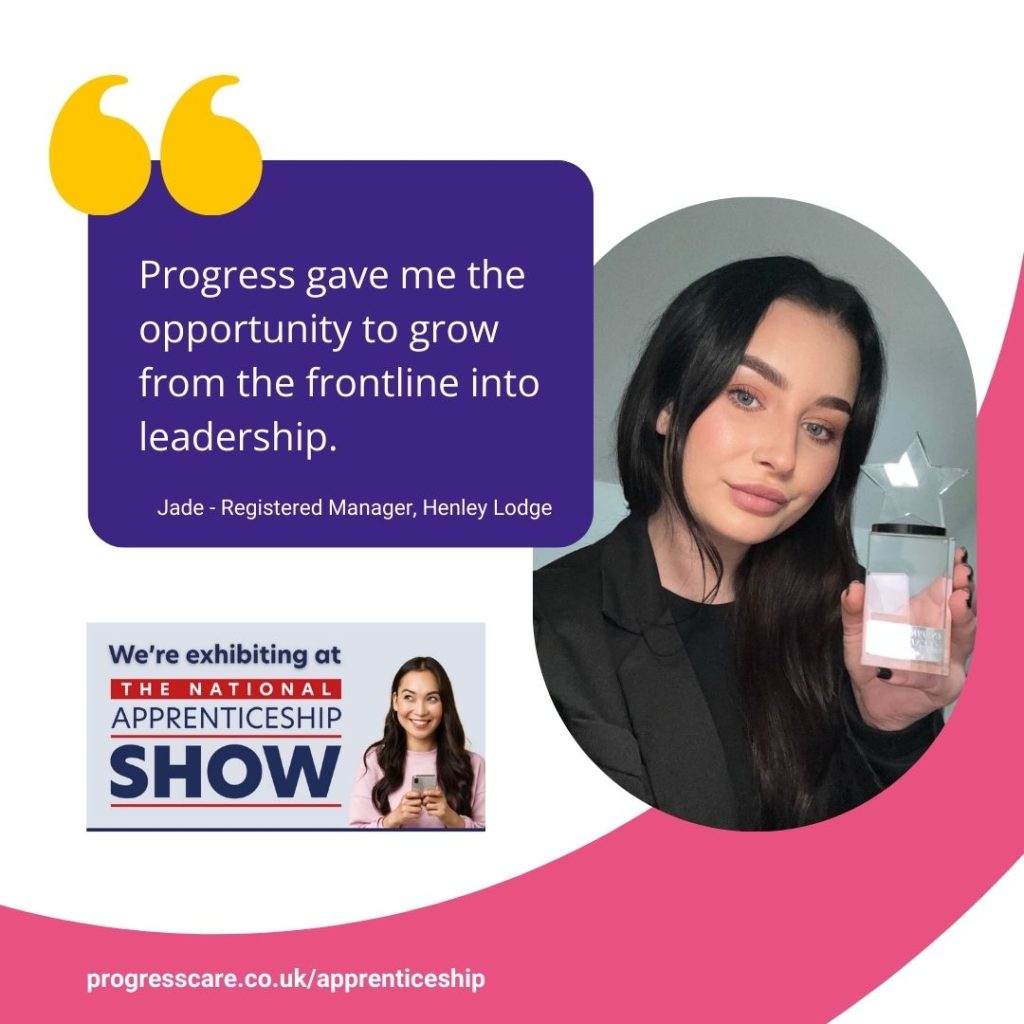
For National Apprenticeship Week, Jade who is the Registered Manager of Progress’ Henley Lodge, a children’s residential service in Coventry, shares her journey trajectory.

I began my journey with Progress Care Solutions about six years ago, with a clear sense of purpose and an open heart. What started as a frontline role has grown into a career shaped by commitment, resilience, and a genuine passion for making a difference in the lives of children and young people. 

My journey is a true example of growth from within. Over the years, I have progressed through every role within the service, gaining invaluable experience and insight at each stage. From Support Worker to Key Worker, Shift Leader, Team Leader, Deputy Manager, Home Manager, and now Registered Manager of Henley Lodge, each step has strengthened my understanding of care and reinforced my dedication to excellence. 

At the heart of my work is a commitment to delivering high-quality, person-centred care for children and young people with learning disabilities. I believe every child deserves to feel safe, valued, understood, and supported to reach their full potential. This belief shapes every decision I make and every standard I set. 

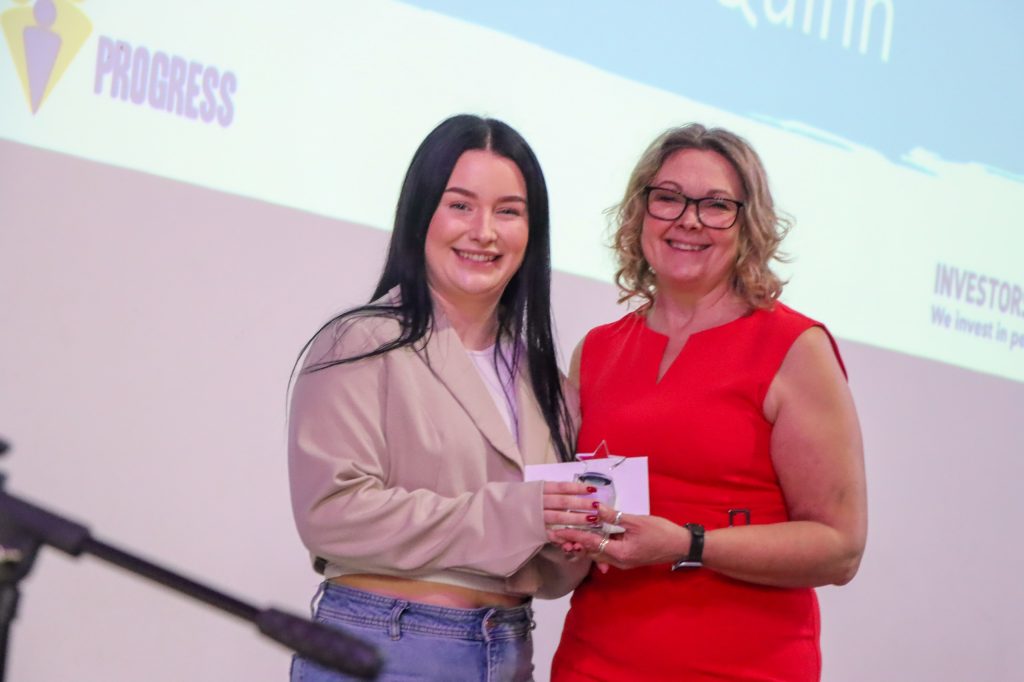
Jade has won several awards at Progress

What matters most to me is developing both the children we support and the people who care for them. I am passionate about nurturing confidence, independence, and growth in young people, while also investing time and energy into supporting staff development. I firmly believe that empowered, skilled, and supported teams create the strongest foundations for exceptional care. 

As Registered Manager of Henley Lodge, I lead with authenticity, compassion, and vision. Having worked across every role, I understand the challenges staff face and the importance of strong, supportive leadership. I strive to be a leader who listens, supports, and inspires, and who leads by example every day. 

Alongside my role, I am nearing completion of my Level 5 Leadership and Management apprenticeship, with my final exam pending. During Apprenticeship Week, my journey reflects the value of continuous learning and the opportunities Progress Care provides to grow, develop, and progress from within. 

My journey is more than a career story. It is proof that when dedication is matched with opportunity, meaningful growth follows — for individuals, teams, and, most importantly, for the children and young people we support. 

There are career opportunities at Jade’s service. Visit progresscare.co.uk/jobs for current career opportunities in Coventry and elsewhere.

National Apprenticeship Week: Growing Careers, Strengthening Care

National Apprenticeship Week is ultimately about people, their progress, their potential, and the futures they are building.

National Apprenticeship Week begins today, and at Progress Care Solutions, it offers a moment to reflect on something that is embedded in everyday practice. Growth. Not just organisational growth, but personal growth. The kind that happens when people are given the space, encouragement, and opportunity to develop their skills, build confidence, and shape meaningful careers in care.

Apprenticeships are often spoken about in terms of qualifications, frameworks, or pathways, but in reality, they are about people. They are about individuals discovering what they are capable of, strengthening their knowledge through experience, and translating learning into better support for children, young people, and adults. When colleagues are supported to develop professionally, the impact extends far beyond the classroom or training session. It reaches into homes, services, and daily interactions, shaping the quality of care delivered every day.

That philosophy is reflected in Progress’ approach to development. As Managing Director Claire Rogers notes, “We’re proud to support our people to grow, progress and lead.” It is a simple sentiment, but one that underpins a culture where development is encouraged, supported, and valued. Across services, apprenticeships are enabling practitioners to deepen their understanding of care and leadership, while opening doors to progression that might otherwise have felt out of reach.

Jade’s journey captures this spirit particularly well. Joining Progress Care Solutions about six years ago with a strong sense of purpose, she began in a frontline role and progressed through each stage of responsibility within her service. From Support Worker to leadership positions and ultimately to Registered Manager of Henley Lodge in Coventry, her path has been shaped by commitment, learning, and reflection. Each role provided insight into different aspects of care and team leadership, strengthening both her confidence and perspective.

Alongside managing her service, Jade is completing her Level 5 Leadership and Management apprenticeship. For her, learning is closely connected to impact. She is deeply committed to ensuring children and young people feel safe, valued, and supported to achieve their potential. At the same time, she invests energy in nurturing the development of staff, recognising that confident and capable teams create the strongest foundations for exceptional care. Having experienced the realities of each role herself, she leads with empathy and authenticity, grounded in understanding rather than distance. Her story demonstrates what sustained opportunity and determination can achieve when they meet in the right environment.

A different but equally meaningful perspective can be seen in the experience of Cosmos Appau, Manager at Portland House. Development, for him, has always been a deliberate choice. After joining as Deputy Manager, pursuing Level 5 Leadership and Management training felt like a necessary step, regardless of whether immediate progression followed. Strengthening his knowledge and gaining tools to support others was the priority.

The apprenticeship structure provided space for reflection and self-assessment, allowing him to measure progress and identify areas for improvement. With guidance from mentors and assessors, the learning became practical and grounded, feeding directly into everyday leadership. It deepened his understanding of legislation, safeguarding responsibilities, and leadership theory, while also shaping how he manages conflict, supports staff development, and guides teams through complex situations. Today, the influence of that learning is evident in his approach, which emphasises reflection, informed decision-making, and continuous improvement. His experience highlights how apprenticeships contribute not only to career progression, but to the depth and quality of leadership within services.

These journeys are not isolated examples. Across Progress Care Solutions, colleagues are engaging in professional development that strengthens both their capabilities and their confidence. Managers are completing or working towards Level 5 diplomas in leadership and management. Practitioners are gaining sector-specific qualifications that deepen their expertise. Others are building foundations through adult care certifications that enable them to progress further. In some cases, qualifications have supported promotion into new roles. In others, they have reinforced knowledge that enhances daily practice. Collectively, they reflect an organisation-wide commitment to recognising potential and investing in people over the long term.

Care is a profession rooted in relationships and understanding. Technical knowledge matters, but so does empathy, awareness, and adaptability. Apprenticeships offer a unique bridge between theory and experience, ensuring learning is immediately relevant and grounded in real contexts. For individuals, they build confidence and create pathways forward. For teams, they strengthen collective capability. For those receiving support, they contribute to consistency, compassion, and quality.

National Apprenticeship Week is therefore not simply a celebration of achievement. It is also a reminder of possibility. It invites those considering a career in care to see development as part of the journey rather than something separate from it. It reassures those already within the sector that growth remains accessible and encouraged.

At Progress Care Solutions, the focus continues to rest on enabling people to learn, develop, and lead with confidence. Investing in individuals is never an abstract concept. It is visible in stronger teams, more thoughtful leadership, and more responsive care environments. Ultimately, it is reflected in better outcomes for the people at the heart of the organisation’s work.

Because when people are supported to grow, progress follows naturally, and the benefits are shared by everyone.

Do you know anyone that would thrive and grow within Progress? Refer them today. Send their details to: refer-a-friend@progresscare.co.uk

The Quiet Power of Male Role Models in Care

Sometimes, the gentlest transformations happen in the smallest moments. A drive through a quiet countryside, a familiar face at the doorway, or a manager remembering what first made him fall in love with care.

2025 Progress Summer BBQ was winding down when Cosmos and Josh finally found a moment to breathe and to talk to me. Children were still laughing across the field; staff huddled with them in small circles and the outdoor natural light softened everything it touched. On the sidelines, away from the DJ’s music and the crowds, the two managers slipped easily into the kind of conversation that only happens between people shaped by the same calling.

Both men lead children’s homes — Progress’ Portland House and Hilton House. Both began as support workers. Both carry the quiet resilience that frontline care teaches. In very different ways, they represent the heart of what International Men’s Day means at Progress: presence, steadiness, tenderness and growth.

For Josh, this summer was a return to something he did not realise he had missed. Hilton House had planned a holiday for all the children. Five young people, one big countryside house and a week carved out of routine. Last year they tried the beach. This year they wanted something softer, something green, something that offered breathing space.

“It was peaceful,” he recalled. “Quiet. Safe. Just right for the kids.”

Preparation became a project of its own. Staff who were not attending still played their part by creating visual aids, drafting social stories, mapping risks and planning activities. Josh found himself doing things he had not done in years. He wrote activity timetables, stepped back into direct risk assessments, went on supply runs and even took charge of the barbecue night. The excitement of the children pulled him instantly back into the rhythm he once knew so well.

The holiday gave him something he did not expect. It reminded him why the work matters. He learned new things about every child, small things and emotional things that only surface when daily life slows down. A farm adventure on the final day revealed unexpected joys, sensory experiences and honest curiosity.

“It refreshed everything,” he said. “And it helps the care plans because you come back with a better understanding. But it also just felt good. Away from the laptop. Back to where we started.”

For Cosmos, the summer carried a different kind of intensity. He had been splitting his time between Portland House and supporting a young person in Coventry who was transitioning into adult provision. The process was gentle and deliberate. Staff from the adult service visited three times a week so that the young person could see familiar faces rather than strangers on their first day in a new service.

“Sometimes they need to see the person who will be there for them,” Cosmos explained. “It is not just about observing. It is about connection.”

He was also preparing for his own upcoming holiday with a young person who rarely gets to leave the home or see family. Museums, aircraft and fire engines were on the itinerary. All the things that light up this young person’s world.

“It is rewarding,” he said softly. “When you take them somewhere new and watch their world grow a little.”

The changing shape of leadership


Both men admitted that management reshapes your relationship with the work. Where they once spent long hours on activities, their roles now involve oversight, planning, safety and systems. Those responsibilities matter deeply but they also create distance from the spontaneous moments that first anchored them in care.

“When we were support workers, we were in it,” Cosmos reflected. “Now you have to think like a manager. You do not lose your love for the children, but you lose some of those moments.”

This summer gave both of them a chance to reconnect with the parts of the job that first captured their hearts.

Across Progress and the wider care sector, women form the majority of the workforce. Male staff are fewer and male managers fewer still. Yet for many children, a positive and gentle male presence plays a vital role in their healing.

Josh has seen how rare that presence can be in the lives of the children he supports.

“For some of them, they have not had many male figures,” he said. “Us being there makes a difference.”

Cosmos agreed. He sees the potential in male staff, sometimes bright, sometimes untapped and sometimes buried beneath comfort.

“We have strong male staff,” he said. “But not all of them believe they can progress. Some do not see themselves in leadership because they have not seen enough of us in those positions.”

Visibility matters. Representation matters. Not through symbolism but through steady reassurance that tells others they belong in these roles too.

Neither manager planned to work in care. One studied music. One simply needed a job after university. One applied for a role without realising it was a care job at all. But somewhere between agency shifts, shared notes, late-night conversations, behaviour support, school runs and small victories, purpose found them.

And they stayed.

They grew.

They now lead.

What they hope for the future


What they want most is for more men to see themselves in this sector. Not as placeholders or task-doers, but as nurturers, protectors, connectors and leaders.

“People do not always think long-term anymore,” Cosmos said. “But care gives you more than a paycheck. It gives you room to grow.”

Josh added another hope.

“People come from all kinds of backgrounds. If they give this work a chance, they might find what we found.”

As the sun slipped behind the trees at the Summer BBQ, Cosmos and Josh settled into the easy rhythm of two colleagues who have walked the same long road. They came into the sector at the same time, learned together, climbed together and held the joy and exhaustion of the work side by side.

Their stories are unpolished in the best way. They reflect the quiet strength men bring to care. Not through noise or bravado but through presence, steady hands and the willingness to show up where it matters most.

For the children supported at Progress, that presence can reshape the world.

To Cos, Josh, and all the men of Progress, Happy International Men’s Day.

How Progress Built a Legacy of Care

It began with a single vision, grew with relentless passion, and today, Progress marks 25 years of changing lives—one young person at a time. 

This Friday, Progress celebrates an extraordinary milestone: 25 years of supporting and transforming the lives of children and young people. What started as a passionate vision has grown into a legacy of impact, powered by leadership, innovation, and an unwavering commitment to care. At the heart of this journey stand two remarkable women: founder and CEO Bal Dhanoa, MBE, and Managing Director Claire Rogers. In a candid and heartfelt conversation, they reflected on the moments, milestones, and meaning behind the Progress story.

Bal remembers the moment she met Claire. “That girl’s got a future with me,” she recalls thinking during Claire’s job interview for a role at Portland House, one of Progress’ earliest homes. “She had fire in the belly, ambition, and a strong value base. I knew I could work with that.” Instead of starting as a care staff member, Claire was brought in as deputy manager, and the partnership was born.

Since then, Bal and Claire have become more than colleagues. They’ve become co-visionaries, collaborators, and, in many ways, family. “We think very similarly,” Bal says. “We often arrive at the same idea around the same time. We just know when something’s right,” Claire added. That synergy has become a hallmark of Progress: quick, bold decisions rooted in deep understanding of care, children’s needs, and the sector’s evolving landscape.

Building Something Different

From the very beginning, Bal set out to do things differently. “I was a small fish in a very big pond,” she says. “I had to learn to swim quickly. Innovation became a necessity.”

That drive to stand out, to do better, has shaped every decision. Whether it was creating Regis House as a respite service during a supervision meeting or designing short-break models like the one at Stourbridge House, Progress has consistently led with imagination and responsiveness.

Claire reflects on the hardest project: “Stourbridge House was a challenge. The model was different, and we had to fight to justify it. But we knew it was right. And today, it has received an Outstanding rating. We’ve helped families stay together. That’s why we did it.”

For Bal and Claire, Progress has always been about people—those cared for, and those delivering that care. “Our staff have given us back in abundance because we’ve trusted them,” Claire says. “You see ability, you give opportunity, and people thrive.”

From volunteers like Kim, who now leads one of the organisation’s flagship services, to those celebrating 15–20 years of service, Progress has grown careers alongside services. “We build people,” Bal says. “It’s in our DNA. Passion, compassion, and commitment—if you don’t have that, you won’t last long at Progress.”

The company culture is built on celebrating milestones. Every five years, Progress pauses to take stock and recognise achievements. This 25-year mark, according to Bal, is not just a celebration, it’s a validation of Progress’ values of care, trust, respect and progress.

The celebration on Friday (June 13th) isn’t only about looking back, it’s also about challenging the way children’s social care is seen.

“We’ve always tried to change the narrative,” says Bal. “Too often, private sector care is seen as profit-led. But we’ve shown that profit can drive growth, investment, and innovation. We’ve built something that puts children first.”

That’s why this year’s keynote speaker, the inspirational Fatima Whitbread, is such a fitting choice. A care-experienced leader herself, she embodies what Progress stands for: resilience, impact, and the power of lived experience. “She’s not just telling her story,” Claire says. “She’s out there changing the world.”

Looking Ahead: A Future of Innovation

As Progress looks toward the next 25 years, both leaders are clear: the future of care will demand adaptability, creativity, and bold thinking.

Bal envisions homes powered by technology, where robots assist with lifting and admin is handled by AI, allowing Progress team members to further focus on delivering care, fostering connections and building even stronger relationships. Claire is also forward-thinking. She sees wearable tech, user-friendly environments, and new ways to give time back to Progress staff and the young people.

But while the tools may change, the core will not. “You still need the human touch,” Bal says, “it’s what makes care meaningful,” Claire added.

Through laughter, stories, outtakes, and even debates about who wore yellow best, Bal and Claire’s dynamic is more than professional, it’s personal. And that’s what makes Progress special.

“It’s been a beautiful journey,” Bal says. “We’ve made a difference. And we’re not done yet.”

As Progress marks 25 years, we invite every staff member, stakeholder, foster carer, partner, family, and friend to join in not just remembering the past, but in reimagining the future. Because for everyone involved, Progress isn’t just a name. It’s a legacy of care.

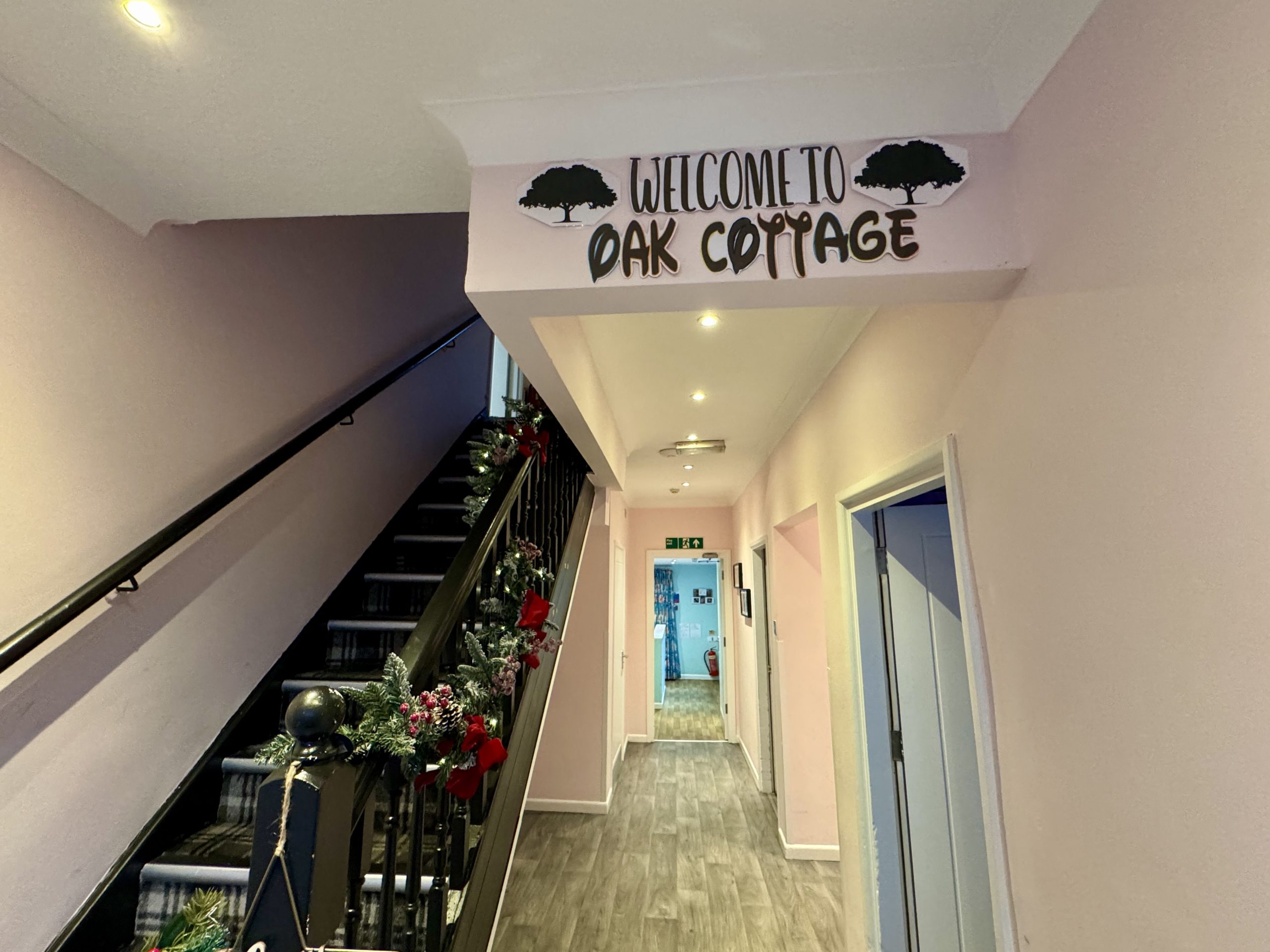
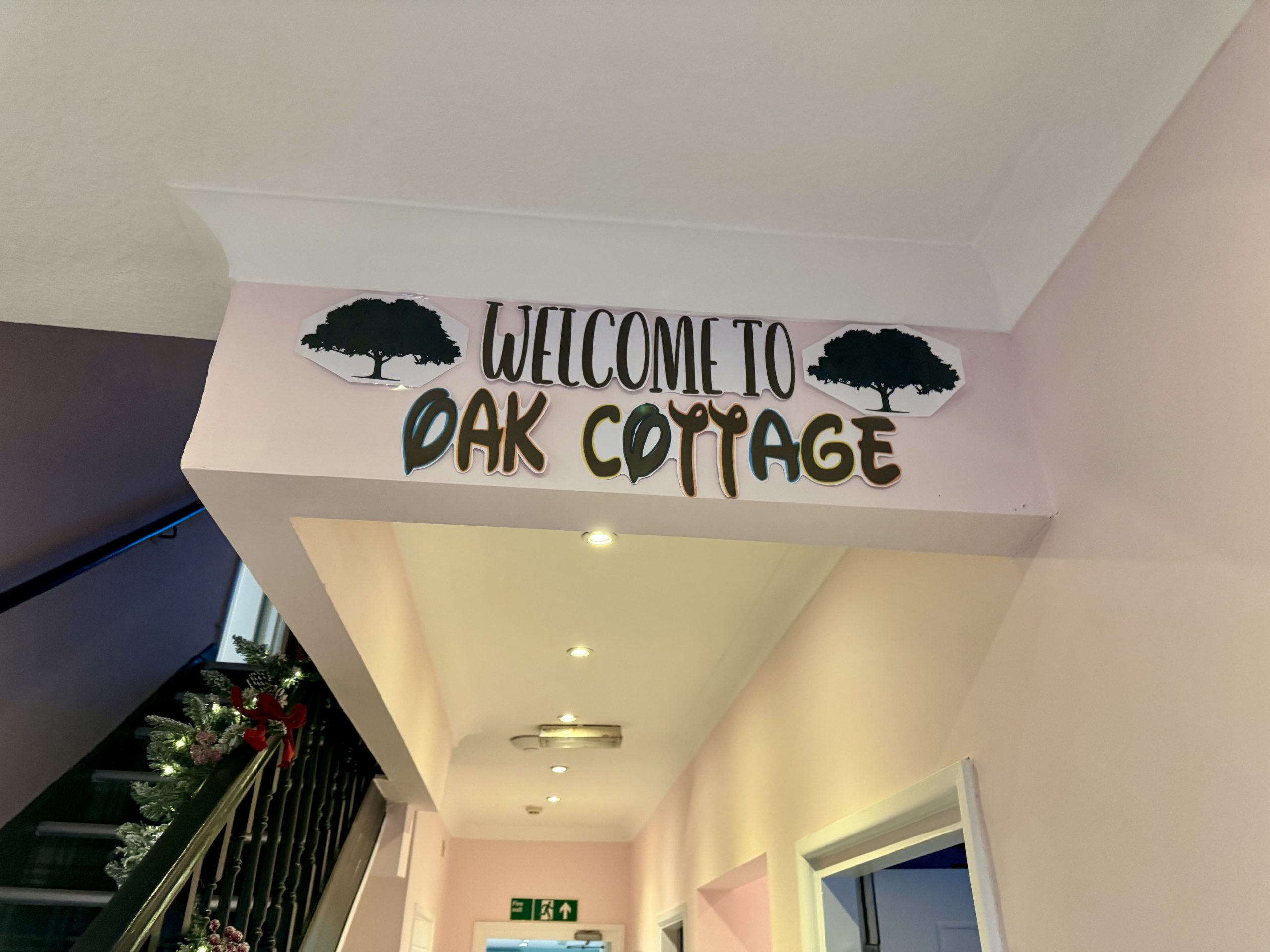
Team Leadership at Oak Cottage: A Balancing Act of Care and Coordination

Oak Cottage is a unique and dynamic home for young people with complex needs, and one of its team leaders is Kelly. Her role embodies a delicate balance of leadership, hands-on care, and strategic oversight, ensuring both the young people and staff thrive in a supportive and nurturing environment. 

Kelly’s journey to team leadership began with her role as a residential support worker (RSW), which she held for just six months before stepping up to lead the team. With a background in health and social care and experience in mental health work, she quickly adapted to the demands of the role, thanks in part to guidance from seasoned colleagues like Tony Marsden. 

“Tony coached me into being a team leader,” she shared. “It’s a big shift—from focusing solely on the young people to overseeing the entire house, managing the staff, and ensuring the young people’s needs are met. It’s about balancing it all.” 

Kelly’s days are anything but predictable. Mornings begin with the hustle of preparing young people for school, from managing personal care to ensuring all their essentials are ready. Once the young people are off, Kelly and her colleagues dive into administrative and management tasks, often juggling schedules, staffing issues, and compliance responsibilities. 

Afternoons and evenings bring the young people back, filling the house with energy and laughter. “It’s like organised chaos,” Kelly explained. “Each young person has their own personality and needs, and they all interact in such unique ways. Watching the eldest and youngest bond or manage their quirks is both challenging and heartwarming.” 

Leading with Empathy 

A hallmark of Kelly’s leadership style is her ability to connect deeply with both the young people and her staff. She emphasises the importance of creating a familial atmosphere at Oak Cottage. “We’re basically the kids’ family,” she said. “We might not be their biological parents, but they see us as family, and it’s our job to provide the love and attention they need.” 

Her approach extends to her team as well. Kelly ensures staff feel supported, particularly during difficult times. When she returned after a period of illness, she noticed a disconnect within the team and took steps to rebuild camaraderie and focus. “You have to remind everyone that we’re all here for the same reason: to care for these kids and give them the best experiences possible.” 

As a team leader, Kelly faces the dual challenge of managing a high-energy home and ensuring all compliance and administrative duties are met. “It’s about finding the balance,” she said. “You can’t let the paperwork overshadow the care we’re here to provide. At the same time, everything needs to be documented to keep things running smoothly.” 

She also deals with the emotional weight of the role, particularly when young people move on from Oak Cottage. “It’s hard when a child you’ve bonded with leaves,” she admitted. “But it’s rewarding to know you’ve played a part in their journey.” 

Building a Solid Team 

Kelly believes a strong, cohesive team is vital to the success of Oak Cottage. She mentors new staff members, sharing her knowledge and encouraging them to embrace the home’s fast-paced and often unpredictable environment. “You won’t bond with every young person the same way, but it’s about making the most of the bonds you do form,” she said. 

For Kelly, enjoying the work is essential. “You have to find joy in the good moments, even on tough days. It’s not just a job; it’s about creating a positive impact on these young lives.” 

Looking to the Future 

Kelly is committed to growing in her role while ensuring she masters each step of her career progression. “I want to be solid in every position I hold, from RSW to team leader and beyond. That way, I can lead with confidence and experience.” 

Her vision for team leadership at Oak Cottage is clear: “It’s about oversight, making sure nothing is missed, and fostering an environment where the kids can thrive and the staff feel fulfilled.” 

Oak Cottage continues to be a place of laughter, resilience, and care. The dedication of the entire team to both the young people and each other exemplifies what it means to lead with empathy, strength, and a focus on making a difference. 

For Kelly, the role of team leader is more than a job—it’s a calling. “It’s about helping these young people see that there’s good in the world and that the bad won’t happen again. That’s what makes this work so meaningful.” 

The Role of a Deputy Manager at Oak Cottage: Mandy’s Perspective

At Oak Cottage, a home dedicated to supporting young people with complex needs, the deputy manager plays a pivotal role in ensuring the smooth operation of the home and the wellbeing of both staff and residents. Mandy is the current Deputy Manager at Oak Cottage. 

Mandy’s day as a deputy manager is a mix of structured responsibilities and the unpredictability that comes with working in residential care. From coordinating rotas and managing staff to handling urgent issues like medication consents and liaising with social workers, her role requires a combination of strong organisational skills and adaptability. 

“Every day is different,” Mandy explains. “Some days, I’m deep in paperwork, updating social workers, and organising schedules. Other days, I’m working closely with the team to resolve challenges or ensure everything runs smoothly for the young people.” 

Mondays involve setting up appointments and ensuring the rota is balanced, while Thursdays and Fridays are dedicated to preparing Ofsted reports and providing updates to social workers. Mandy also emphasises the importance of staying accessible to staff for support and guidance throughout the week. 

Transitioning from Elderly to Children’s Care 

Mandy’s journey to Oak Cottage began after 26 years in elderly care, including a decade as a manager. Transitioning into children’s care was a significant adjustment for her. “It’s completely different,” she says. “Everything from the paperwork to the emotional dynamics is unique. I had to learn a lot—fast.” 

Initially, the role felt overwhelming. “I thought, ‘I’ll never be able to do this,’” Mandy recalls. However, with support from the team and a willingness to adapt, she has grown into her role. Now, she reflects on how much she has learned and how rewarding the experience has become. 

Support and Teamwork at Oak Cottage 

One of the aspects Mandy values most about her role is the strong support system at Oak Cottage. Whether she’s working with the registered manager or seeking guidance from the head office team, she never feels alone in facing challenges. 

“You’re not on your own here,” Mandy says. “There’s always someone to turn to—whether it’s a colleague, the management team, or the resources available online. It makes all the difference when things get tough.” 

Finding Fulfilment in Supporting Young People 

For Mandy, the most rewarding part of her role is the sense of accomplishment she feels after making a positive impact on the lives of the young people at Oak Cottage. “Coming from elderly care, I wasn’t feeling fulfilled anymore,” she explains. “But here, working with complex children, I feel like I’m making a real difference. It’s a deeply fulfilling experience.” 

She shares how learning about the backgrounds of the young people can be both heart-wrenching and motivating. “Sometimes, I look at these children and think, if I had a spare bedroom, I’d take them home with me,” she says. “But knowing they’re so well cared for here makes it easier to leave at the end of the day.” 

Qualities for Success as a Deputy Manager 

When asked about the qualities needed to succeed as a deputy manager, Mandy highlights patience, adaptability, and a willingness to learn. “You don’t need to have all the knowledge upfront,” she says. “Oak Cottage is a place where you’ll be trained to a high standard. They’ll support you, guide you, and help you grow into the role.” 

She also notes the importance of resilience and a strong work ethic. “It’s not always easy, but the rewards far outweigh the challenges.” 

A Growing Sense of Belonging 

After six months in the role, Mandy reflects on how far she has come. “It took me a while to settle in,” she admits. “But now, I feel like I’ve been here for years. I’ve started to really enjoy my job, and it’s all thanks to the supportive team and the incredible young people we care for.” 

For Mandy, being a deputy manager at Oak Cottage is more than just a job—it’s an opportunity to contribute to something meaningful. Whether she’s mentoring staff, solving problems, or ensuring the young people have the care they need, she knows her work has a lasting impact. 

“Every day, I walk away feeling like I’ve done something important,” she says. “That’s what makes this role so special.” 

Mandy’s story reflects the heart and dedication required to be a deputy manager at Oak Cottage—a role that combines leadership, compassion, and a commitment to making a difference. 

Progress Fostering Service Celebrates Successful Annual Fostering Panel Day

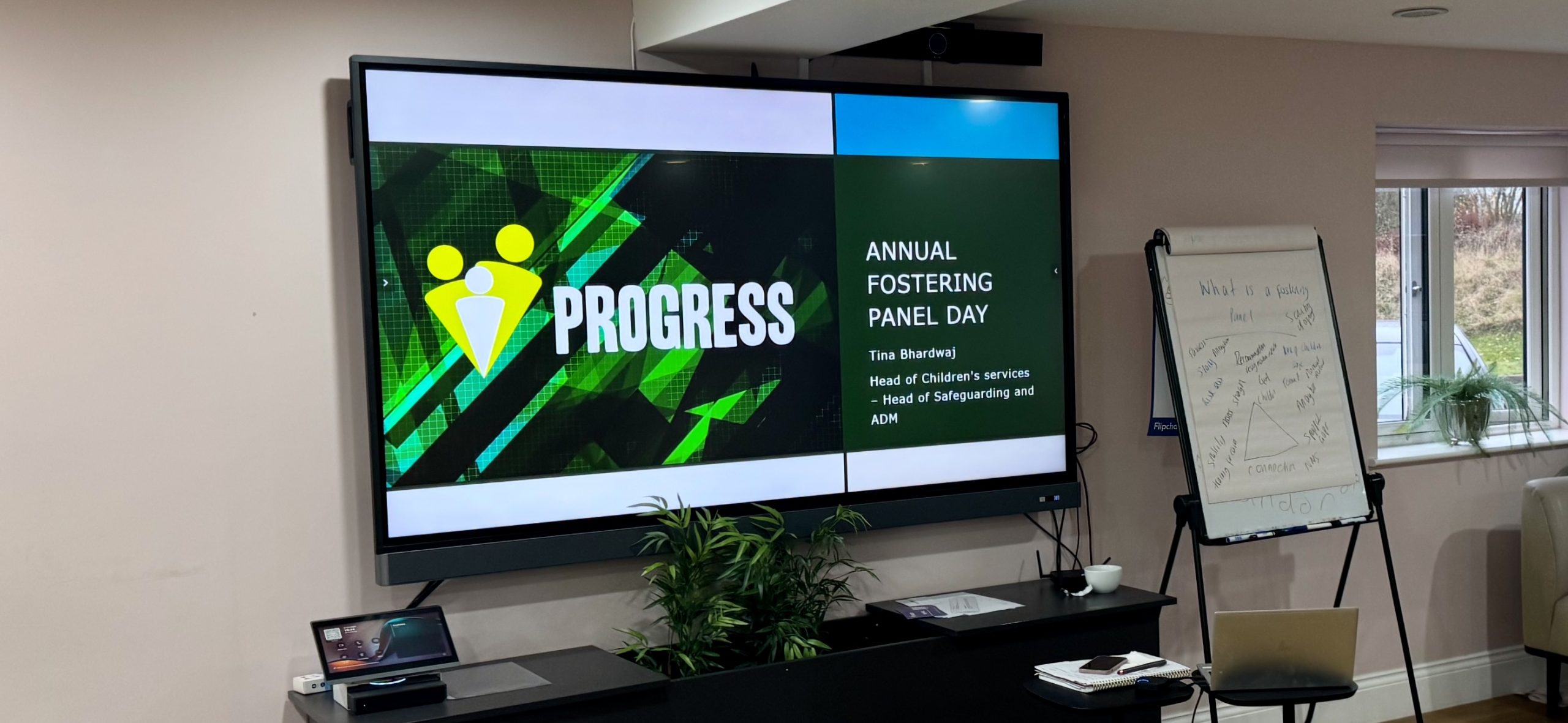
Progress Fostering Service today held its much-anticipated Annual Fostering Panel Day, a significant occasion for reflection, collaboration, and forward planning. The event brought together panel members, supervising social workers, and other stakeholders, including Tina Bhardwaj, Head of Children’s Services, and Michelle Earp, the recently appointed Fostering Manager.

The day was designed to strengthen the fostering process, ensuring compliance with legislation while enhancing the experience for all involved. Tina Bhardwaj highlighted the importance of this annual event as an opportunity to reset and align goals for the year ahead. “We met with all the panel members for an annual training event to review panel processes and identify improvements. It was a chance to, among others, reflect on what we’ve done well, and remind ourselves of the fostering panel’s purpose,” she said. Tina also emphasised the value of the professional expertise and diverse backgrounds of panel members, which bring significant depth to the fostering process​.

Michelle Earp shared her insights into the outcomes of the day, describing the feedback from attendees as both “amazing and constructive.” She appreciated the opportunity for panel members to meet new supervising social workers, fostering collaboration and mutual understanding. “It’s been refreshing to catch up with panel members and hear their feedback. It’s clear what they want, and this gives us actionable steps to make the process smoother,” she remarked.

The event also featured professional development sessions, including reviews of key legislation and discussions about the roles and responsibilities of panel members. These sessions reinforced the importance of adhering to governance standards while inspiring new ideas for improving the fostering experience for both foster carers and children.

Attendees enjoyed a welcoming atmosphere, bolstered by opportunities to connect over thoughtfully prepared meals and informal discussions. This balance of structured training and casual engagement reflected the service’s commitment to fostering a collaborative and supportive community.

As Progress looks to the future, the feedback and insights gathered from this year’s Fostering Panel Day will shape ongoing improvements, ensuring the highest standards of care and support for children and their fostering families.

Progress Fostering Service is committed to providing safe, nurturing environments for children and young people. By prioritising quality, collaboration, and professional excellence, the service continues to make a meaningful difference to the fostering community.

Building Connections: Insights from Steven Russell at the Progress Annual Conference 2024

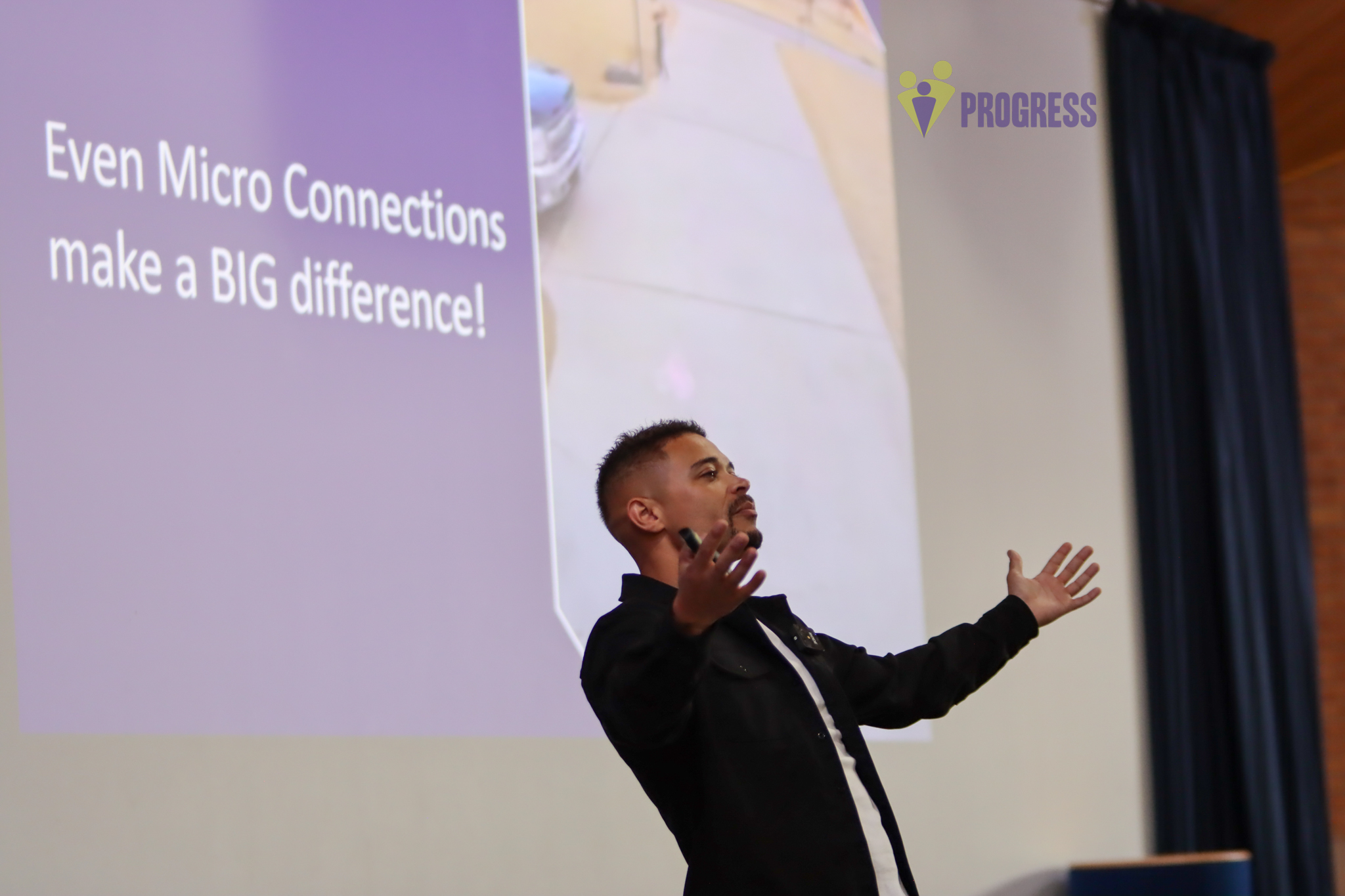
At the Progress Annual Conference 2024, Steven Russell delivered a compelling speech that resonated deeply with the audience, emphasising the vital importance of building connections with young people. Through personal anecdotes, powerful media references, and insightful reflections, he outlined the challenges and responsibilities that come with fostering and supporting children in care. 

The Challenge of Connection 

Russell began by acknowledging the numerous barriers that professionals face when trying to connect with the young people they serve. “It’s easy to make a connection,” he stated, “but it really isn’t.” He highlighted a common refrain he hears: the lack of time. Many professionals express frustration over their busy schedules, believing that more time would allow for deeper connections. However, Russell challenged this notion, suggesting that the quality of interactions often outweighs the quantity of time spent. 

To illustrate this point, he shared a poignant clip from the television show “The Fresh Prince of Bel-Air,” where the character Will Smith confronts feelings of abandonment and the emotional impact of absent parental figures. This scene poignantly captures the “empty spaces” in the lives of young people—gaps filled with longing for connection and support. 

The Power of Presence 

A key takeaway from Russell’s speech was the idea that genuine connection does not always require grand gestures or profound words. Instead, it thrives on simple presence and availability. “What makes something better is connection,” he stated. Russell encouraged caregivers and professionals to be physically and emotionally present for the children in their care. “They don’t need you to make things right by telling them,” he emphasised. “Just being with them is enough.” 

Russell introduced five essential elements that foster these connections: patience, presence, curiosity, creativity, and authenticity. He explained that these traits can be practised daily, encouraging professionals to be aware of their interactions and to strive for improvement in their approach. “You don’t have to get it right all the time,” he reassured the audience. “Just show up as you are.” 

Reflecting on Personal Experiences 


Drawing from his own journey through the care system, Russell shared his belief that the emotional needs of young people are often overlooked. He urged the audience to recognise that behaviours such as anger or withdrawal might be attempts to communicate deeper feelings of hurt or insecurity. He stressed the importance of understanding each child’s unique perspective and the need for consistent, patient support. 

Using a powerful metaphor, he compared interactions with young people to counting letters on a page—everyone sees something different. This analogy served as a reminder that each child has their own story and perspective, which might not always align with the observations of the adults around them. 

The Role of Community 

Russell highlighted the collective responsibility of the community in supporting children in care. He reminded attendees that every interaction counts, no matter how small. “Every single person has an effect,” he asserted. From the head teacher to the lollipop lady, every role in a child’s life is significant. By fostering a collaborative environment where everyone’s voice is valued, professionals can create a more inclusive and supportive community for young people. 

Embracing Creativity and Authenticity 

In his closing remarks, Russell encouraged attendees to embrace creativity in their interactions. He shared examples of how imaginative approaches can open doors to meaningful communication and connection. By allowing themselves to be authentic and curious, caregivers can foster environments where young people feel seen and valued. 

Russell’s inspiring message served as a powerful reminder of the importance of connection in the lives of children and young people in care. As professionals and caregivers, we have the opportunity to make a significant impact through our presence, patience, and genuine engagement. By prioritising these connections, we can help fill the empty spaces in the lives of those we serve, creating a brighter future for our youth. 

As we reflect on Steven Russell’s insights, let us remember that every moment spent with a young person is an opportunity to build trust, foster growth, and inspire hope.