Fostering is my way of making a positive difference in the world. If you can offer a child a home and the support they need at a difficult time in their life, then you must get involved.
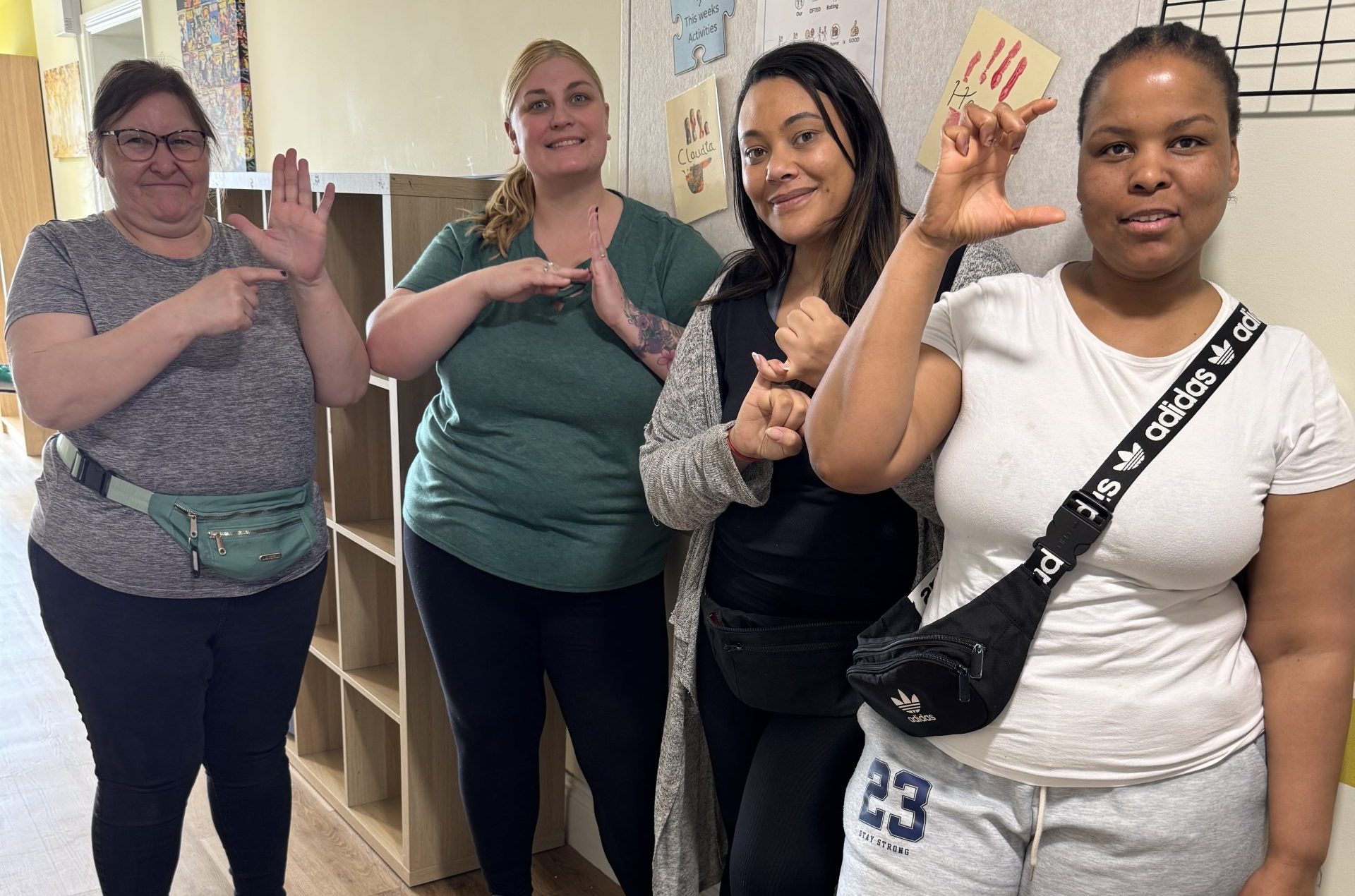
The team at The Bridge marked National British Sign Language (BSL) Day in a simple but powerful way — celebrating inclusion, communication, and the importance of being understood. The Bridge is one of the services under Progress Children’s Services.
With a young person at The Bridge whose first language is British Sign Language, the day held particular significance. Staff came together to learn and sign the first letter of their names, recognising the vital role that accessible communication plays in creating a supportive and inclusive environment.
The activity was a meaningful moment of connection, reinforcing The Bridge’s commitment to ensuring every young person feels seen, heard, and respected. By embracing BSL, the team demonstrated how small actions can make a big difference in helping young people feel understood and valued.
National BSL Day is an opportunity to celebrate British Sign Language and the Deaf community, and at The Bridge, it was marked with genuine care, togetherness, and pride.
Take a look at the photos below to see how the team came together to mark the day.
Stourbridge House, part of Progress Children’s Services, is stepping forward this May in support of autism acceptance, with a special 5K walking challenge taking place as part of World Autism Acceptance Month.
Venice and the team at Stourbridge House, alongside the incredible young people they support, are coming together to take on a 5K walk for autism — raising awareness, promoting acceptance, and celebrating the individuality and unique strengths of every autistic person.
To mark the occasion, colleagues across Progress, as well as families and foster carers, are invited to take part in a “Walk 5K Your Way” challenge. The idea is simple: walk 5K anytime, anywhere, and in whatever way works best for you. Whether it’s a stroll through your local park, a walk around your neighbourhood, or joining colleagues and friends, every step helps amplify understanding and acceptance.
At Stourbridge House, acceptance is at the heart of everything the team does. Each day, they create a safe, nurturing environment where children and young people can develop independence, build social skills, try new experiences, and feel empowered to be themselves. For many, Stourbridge House is a place where they feel understood, supported, and encouraged to thrive.
Join the group walk
Those who would like to walk together are welcome to attend the group event:
Location: West Park (by the play area)
Date: 9 May
Time: 10:30am
Colleagues are encouraged to attend, along with families, foster carers, and supporters from across the Progress community.
Support the fundraiser
Anyone wishing to support the Stourbridge House autism acceptance fundraiser can donate via the link below:
Stress is not an occasional visitor in care. It’s a constant companion, woven into decision‑making, responsibility, safeguarding, staffing pressures, and the emotional labour that comes with supporting vulnerable people every day. To commemorate Stress Awareness Month, three Progress managers talked about how they experience stress and, more importantly, how they live alongside it.
Their answers couldn’t be distilled into a single coping strategy, and that’s exactly the point.
Living with it, not fighting it
For Amanda Pugh, Registered Manager at Spring Meadow, stress isn’t something that comes and goes. It’s more permanent than that.
“I don’t really have time to deal with stress,” she says honestly. “It’s more about distraction.”
Amanda doesn’t frame stress as a problem with a solution. Instead, she describes living with it: acknowledging that it’s always there but finding moments where it loosens its grip. A cup of tea that lasts a little longer than usual. A task that pulls focus elsewhere. A brief pause that allows her mind to step away, even temporarily.
“Stress doesn’t go away,” she explains. “But finding a short distraction helps take my mind off it. As soon as it’s finished, the stress is still there.”
Perspective, not perfection
At Stourbridge House, Deputy Manager Jessica Freeman approaches stress differently. Rather than trying to push it away, she actively works to manage it.
“Stress is always going to be part of the job,” she says. “So, I try to manage it rather than fight it.”
For Jessica, that starts with perspective. When everything feels urgent, she reminds herself that not everything needs to be solved at once and that it’s okay not to have an immediate answer.
“I focus on what I can control by staying organised and prioritising,” she explains. “I remind myself I don’t have to figure everything out straight away. I can take time to decide the best course of action.”
But some of Jessica’s most powerful grounding doesn’t happen at work at all. When she goes home, her world shifts.
“Spending time with my daughter really puts everything into perspective,” she says. “It reminds me why I do this job and why the support we give children matters so much.”
That contrast between the intensity of the workplace and the simplicity of family time helps her reset. Fresh air, small routines, moments that belong entirely to her life outside of care. These aren’t luxuries; they’re anchors.
“Looking after my wellbeing outside of work gives me the chance to switch off,” she says. “So, I can come back ready to carry the responsibility again.”
Choosing peace where possible
At Wellcroft House, Registered Manager Sabrina Patel takes a more philosophical approach to stress — one rooted in boundaries, teamwork, and mindset.
“I review my workload and prioritise,” she says. “And I lean on my team.”
There’s no suggestion here of managing everything alone. Stress, Sabrina believes, becomes heavier when it’s carried in isolation. Sharing responsibility, asking for support, and trusting colleagues are part of how she keeps overwhelm at bay.
She’s also intentional about patience, both with situations and with herself.
“Personally, I feel stress is a choice we can control,” she reflects, acknowledging quickly that not everyone will see it that way. For her, stress often sits in the gap between what’s happening and what we can realistically influence.
“I try not to overwhelm myself with things I can’t control,” she says. “I focus on seeing the good and learning from what’s causing stress.”
It’s a mindset grounded in reflection rather than reaction. A conscious decision to choose peace where possible, even when pressures remain.
“Peace over problems,” she says simply.
No one way to carry it
What links these three perspectives isn’t a single solution, it’s honesty. Stress shows up differently for everyone. Some manage it through momentary distraction. Others through structure, reflection, or support. Some by stepping back. Others by leaning in.
In care, stress isn’t a weakness. It’s often a sign of commitment, of people who care deeply about doing the right thing, even when the circumstances are challenging.
This Stress Awareness Month, these stories remind us that wellbeing doesn’t have to look perfect. Sometimes it looks like acceptance. Sometimes it looks like perspective. Sometimes it’s just choosing the next right step and giving yourself permission to pause.And sometimes, it’s simply knowing you’re not alone in carrying the weight.
Amanda and her team members have now gotten used to life at Spring Meadow. During their last days at (and as) Stourbridge House (Adults), she reflected on the service’s impacts, journey, fond memories, its transformation and what she’ll miss the most. Her answer was quite surprising.
Before the new building, before the referrals, before the first family walked through the door in crisis, there was only a vision. Progress’ belief that care could be done differently. For years, the walls of Stourbridge Adults held more than just the routines of daily care. They have absorbed laughter, stress, quiet breakthroughs, and the steady rhythm of a place determined to make a difference where the system often falls short. Though modest, it has become a trusted refuge for families in crisis and a launchpad for young adults with disabilities stepping into independence—now at the end of one chapter and the beginning of its next.
Amanda Pugh, the service’s first and current registered manager at Spring Meadow, has led with a commitment that has shaped the culture of care from the very beginning. “Some providers won’t take some young people due to behaviours,” she said. “But we don’t refuse on that basis. If we have the skill set, we support them.”
The service has built its reputation not just through official referrals but through word of mouth among parents seeking hope and practical help. Families who once stood on the brink of breakdown have found relief, rest, and dignity through the support provided here. And many of the young people who entered unsure of their next step have since moved into homes of their own.
Among the many success stories that pass through these doors, Pugh is especially moved by Matthew’s. “His mum had it really hard,” she said. “Having him here meant she could get a good night’s sleep, even go on holiday with her daughter. It gave her a piece of her life back.”
There are other stories, too, of young people who once struggled to express themselves, now confidently advocating for their own futures. Of families who had lost faith in the system but regained trust through the service’s consistent support. Pugh recalls one parent who broke down in tears during an assessment, not out of frustration, but relief that someone was finally listening.
The transformation isn’t just in the individuals but in the atmosphere of the service itself. Staff are trained to respond not simply with policy, but with presence. Over the years, Pugh has seen carers develop relationships that go far beyond checklists—teaching cooking, managing emotions, navigating friendships. In quiet moments, the young people have learned how to communicate preferences, manage stress, and build daily routines that support independence.
But the building that once felt expansive now strains at the seams. The adults who once arrived as young people have grown taller, stronger, more complex. So too have their needs. A new facility, Spring Meadow, is on the horizon—larger, quieter, and built with therapeutic principles at its core.
“We’ll have sensory gardens, more open space, and larger rooms,” Pugh explained. “So when someone needs quiet, they don’t have to retreat to a bedroom. They’ll have choices.”
The outdoor space will also see dramatic improvement. The new space will allow for movement, nature, and calm. For individuals prone to sensory overload, that shift could be life-changing.
The service has also rolled out “Pathway Journals,” where service users track milestones in independence, document progress with photos, and receive certificates recognising achievements. These journals aren’t just administrative tools. They are, as Pugh sees them, mirrors reflecting each person’s journey into adulthood.
“It’s about helping them communicate their choices, their beliefs, and what they want to do next,” she said. “We want them to see their own growth, not just be told about it.”
As the service as now completed its relocation and transformation, Pugh was measured in her sentimentality. She knows what has worked, and she knows what must change. “We thought about replacing quite a lot,” she said. “This building was okay when we were small. But now, our adults need more space.”
What will she miss? “Honestly,” she paused. “Maybe the memories. But everything that matters, we’re taking with us.”
Social care provider, Progress Care Solutions, is marking World Autism Awareness Day by highlighting the importance of inclusive, person-centred support for autistic people and their families across the UK.
Observed globally on 2 April, World Autism Awareness Day was established by the United Nations to promote understanding of autism and improve the quality of life for people on the spectrum so they can participate fully in society.
In the UK, autism affects around 700,000 people — more than 1 in 100 individuals. When families are included, autism touches the lives of an estimated 2.8 million people across the country. Despite growing awareness, many autistic people still face significant barriers in everyday life — from accessing diagnosis and tailored education to finding meaningful employment and community inclusion.
Only around 30% of autistic adults in the UK are in paid employment, one of the lowest employment rates among disability groups. Meanwhile, demand for diagnostic assessments continues to grow, with NHS data showing rising referrals and increasing waiting times for autism assessments across England.
For organisations like Progress, these statistics reinforce the need for services that not only support individuals but also recognise and celebrate neurodiversity.
Supporting autistic people to live fulfilling lives
Autism Spectrum Condition (ASC) is a neurodifference that affects an individual’s social interaction, communication, and behaviour. It is a spectrum condition because it affects individuals in different ways and to varying degrees.
Autistic individuals may have challenges understanding social cues, such as body language and facial expressions, and communicating effectively with others. They may also engage in repetitive behaviours or have more narrow interests.
ASC is a lifelong neurodifference that is typically diagnosed in early childhood, although some individuals may not receive a diagnosis until later in life. It is estimated that around 1 in 100 people in the UK are autistic. Whilst more males are diagnosed with autism than females, the number of females being diagnosed is steadily growing as awareness of autistic traits amongst girls and women increases.
With the right support, autistic individuals can thrive in education and work, maximising their strengths and developing strategies to address challenges they may experience.
Through its specialist services, Progress works closely with individuals, families, and local authorities to provide person-centred care that promotes independence, wellbeing, and meaningful life opportunities.
This includes:
Supporting individuals with autism and additional needs in residential and supported living environments
Creating autism-friendly environments that respect sensory needs and routines
Working collaboratively with families, professionals, and local authorities
Encouraging skill development, confidence, and community participation
Claire Rogers, Managing Director, Progress Care Solutions said:
“World Autism Awareness Day is an opportunity to recognise the strengths, talents and potential of autistic people while also acknowledging the challenges many still face.
At Progress, we believe that with the right understanding and support, every individual can thrive. Our focus is on providing compassionate, person-centred care that enables people to live fulfilling and independent lives.”
Moving beyond awareness to inclusion
While awareness of autism has improved significantly over the past two decades, experts increasingly emphasise the importance of acceptance, accessibility and inclusion.
Across the UK, many autistic people and their families continue to navigate long waiting times for diagnosis, gaps in education support, and limited employment opportunities. Recent surveys have also highlighted challenges in mainstream schools, where autistic pupils often experience higher levels of absence due to anxiety or unsuitable learning environments.
For Progress, meaningful change requires a collaborative approach involving care providers, policymakers, educators, and communities.
By promoting understanding and providing specialist support services, organisations like Progress aim to help create communities where autistic people are valued, supported, and empowered to achieve their goals.
As the world marks World Autism Awareness Day, Progress is encouraging individuals and organisations alike to take simple steps that make a difference — from improving understanding of autism to creating more inclusive workplaces and communities.
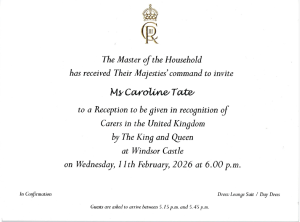
On a winter morning, before the traffic thickened on the motorways and before the gates of Windsor Castle opened to welcome hundreds of guests, Caroline, a residential support worker with Progress’ Nightingale House in Derby was already having what she would later describe as “the best and worst day of my life.”
The worst part came first.
She had set out early for a royal reception honouring care workers. The invitation alone had been surprising. Weeks earlier, the Care Workers’ Charity had contacted her: the King and Queen wanted to host a special event recognising the contribution of carers across the country. Not everyone could attend, of course, but a handful had been selected.
Caroline was one of them.
“It wasn’t the charity that picked us,” she recalled. “It was the palace.”
For a care worker used to long shifts, medication charts, and the quiet rhythms of supporting people with complex disabilities, the idea of being invited to a royal reception felt surreal. But she got in the car anyway and began the journey south.
Then everything went wrong.
Somewhere between leaving home and pulling into Toddington services on the M1, she realised something was missing. Actually, several things were missing.
Her phone.
Her sat-nav.
Her bank card.
Her money.
Even her ID.
Everything was in the phone she had left behind.
“I had a little mini meltdown in the toilet,” she said, laughing now at the memory. But at the time the panic was real. Without navigation, without money, and without the identification required for entry into the castle, the trip suddenly felt impossible.
Still, she carried on.
She knew one thing at least: don’t turn left onto the M25 motorway toward Brighton and Gatwick. Instead, she aimed toward Heathrow. Stuck in traffic, she asked a van driver if she was heading the right way. He didn’t know.
Another passenger leaned forward and offered advice.
“Come off at Heathrow,” he told her. “Join the M4 motorway and follow the signs for Legoland Windsor. That’s near Windsor.”
And somehow, that worked.
She arrived thirsty, stressed, and still without money—but she arrived.
The royal invitation
A room full of care
Inside the castle, the atmosphere felt worlds away from motorway panic.
The reception gathered care workers, advocates and public figures who had personal experience with caring for loved ones. Among the guests were politicians, including Prime Minister Keir Starmer, and well-known figures who had spent years supporting relatives through illness.
But the centre of attention was the King.
When King Charles III entered the reception room, Caroline noticed something unexpected.
“He’s smaller than he looks on television,” she said. “And a bit frailer.”
The monarch had been undergoing treatment for cancer, and the signs of illness were visible. His hair, once grey, had turned nearly white.
Yet when he spoke with guests, something else stood out.
“When he smiled and talked to you, he seemed genuine,” Caroline said. “He really seemed to care about what you were saying.”
The King attempted to greet nearly everyone in the room. When he reached Caroline’s group, he shook hands and thanked them collectively for their work.
For many in the room, that recognition mattered deeply.
Care workers often feel invisible. Their work—feeding, bathing, calming distress, celebrating tiny milestones—happens quietly behind closed doors.
But in that moment, inside the castle, the work was seen.
“What he did putting that reception on for us,” Caroline said, searching for the right word, “it was appreciative.”
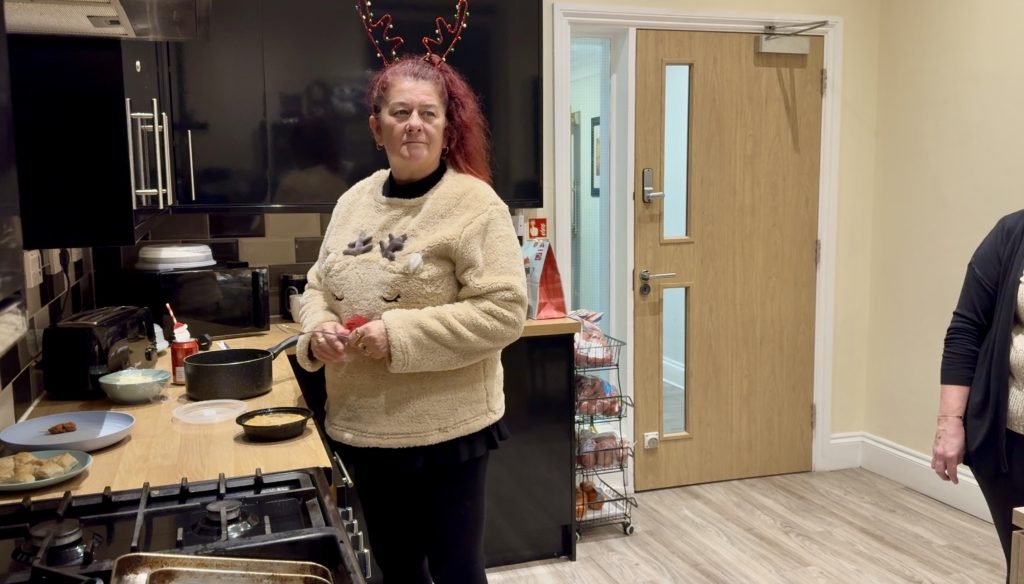
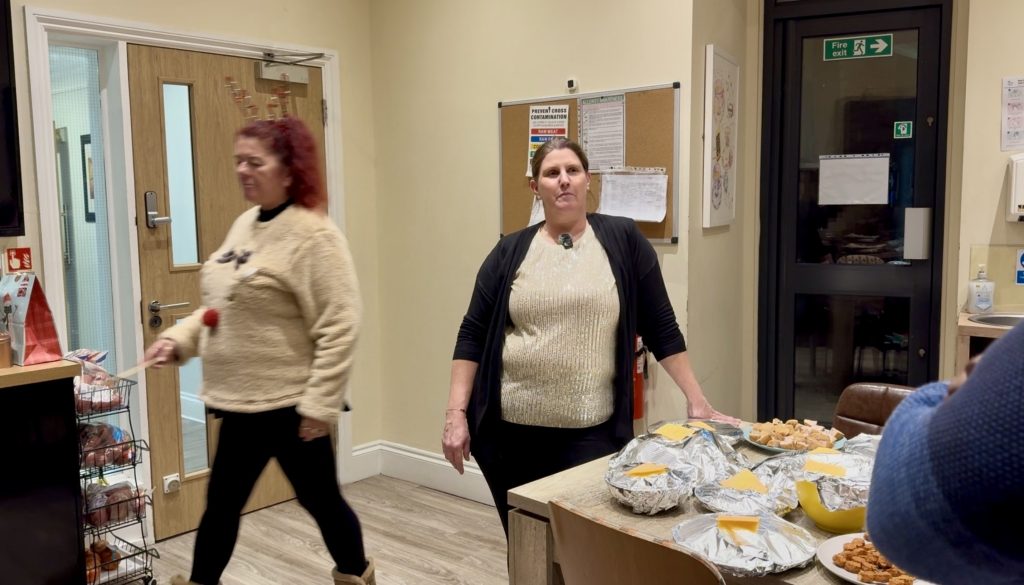
Caroline on duty at Nightingale House’s Christmas party 2025
A profession often overlooked
Caroline has worked in care for about a decade. Before that, she had done other jobs, but none had felt quite as meaningful.
“I wish I’d done it sooner,” she said.
Care work, she believes, attracts a particular kind of person.
“Anybody who applies for these jobs—they’re caring people anyway. Otherwise they’d be working somewhere else.”
Still, recognition doesn’t always match the demands of the job. Care workers across the UK frequently speak about low pay, staff shortages and limited public understanding of what their work entails.
“They say we’re untrained, low-wage workers,” she said. “But someone stacking shelves couldn’t walk into here and do this job. And yet we could go and stack shelves.”
The comment reflects a broader frustration across the sector: the complexity of care work often goes unseen.
At Nightingale House, Progress’ adult residential service in Derby where Caroline works, residents live with severe disabilities. Many are non-verbal. Progress can be slow and subtle.
But sometimes a moment arrives that changes everything.
One resident had always resisted physical contact. “He doesn’t like being touched,” Caroline explained. “If you try to hold his hand, he pushes you away.”
After months of working patiently with him—sitting nearby, talking, building trust—something shifted.
“One day he grabbed my hand and held it.”
For an outsider, that might sound like a small thing.
“For me,” she said, “that’s massive.”
Back at Windsor, the day’s difficulties were not over. Caroline still had no money. But care workers, she says, look after each other too.
Inside the reception she met another attendee, Georgia, who had heard about the motorway ordeal.
“She just shoved some money in my hands,” Caroline said. “She said, ‘Give it me back when you can. You might need fuel. You might need a drink.’”
The gesture was simple but powerful.
“This is just the kind of people we are.”
Finding a voice
Beyond the reception itself, Caroline has recently been involved in advocacy through Progress-backed The Care Workers’ Charity, helping amplify the voices of frontline staff.
“For years the only time you heard from them was when they were visiting,” she said. “Panic, panic, panic.”
Now, she’s part of conversations shaping how care is delivered and regulated.
“It’s nice to have a voice,” she said. “I’m not really one for speaking in front of people, but it’s nice to know someone somewhere is listening.”
The advocacy has also highlighted another issue close to her heart: the treatment of international care workers. Many migrant carers arrive in the UK under strict visa conditions and face uncertain pathways to citizenship.
Some, she says, endure harsh working conditions.
“We’re lucky where we are at Progress,” she said. “But there are some real nightmare stories out there.”
The hope is that collective voices can help push for change.
Screenshot
Back to everyday care
By the time Caroline returned home, the royal reception had already begun to feel unreal.
At work the next day, colleagues teased her about curtsying etiquette and asked for stories from the palace.
But life quickly returned to its familiar rhythm.
There were residents to support, hydrotherapy sessions to attend, baking activities in the kitchen, and daily routines that make up the heart of care work.
One resident laughs uncontrollably when he’s in the hydrotherapy pool. Another enjoys trips on the bus to nearby towns. These small moments—shared laughter, a held hand, a successful outing—form the real rewards of the job.
And that, Caroline says, is what people outside the sector often miss.
“We just take our caring personalities,” she said, “and do it as a job.”
The royal reception may have lasted only a few hours, but the recognition it represented carried weight. For one day, the quiet work of care stepped into the spotlight—right inside Windsor Castle.
And for Caroline, the memory will always include two things: the panic of navigating motorways without a phone, and the moment a king looked her in the eye and said thank you.
We have exciting career opportunities at Nightingale House in Derby and across Progress’ services across West Midlands. Check out our latest career opportunities: progresscare.co.uk/jobs
“AI might replace many jobs, but care will always need people.”
On Tuesday and Wednesday this week, thousands of young people, educators, employers and training providers gathered at the Coventry Building Society Arena, home of Coventry City F.C., for the National Apprenticeship Show West Midlands.
Across the exhibition hall, industries competed for the attention of the next generation of workers. Major brands such as Rolls-Royce Holdings showcased engineering careers, while the British Army brought one of the most immersive displays of the event, complete with simulations, interactive activities and even a live band.
Amid the buzz of recruitment stands and career pitches, one message stood out. The future workforce must also include the next generation of care professionals.
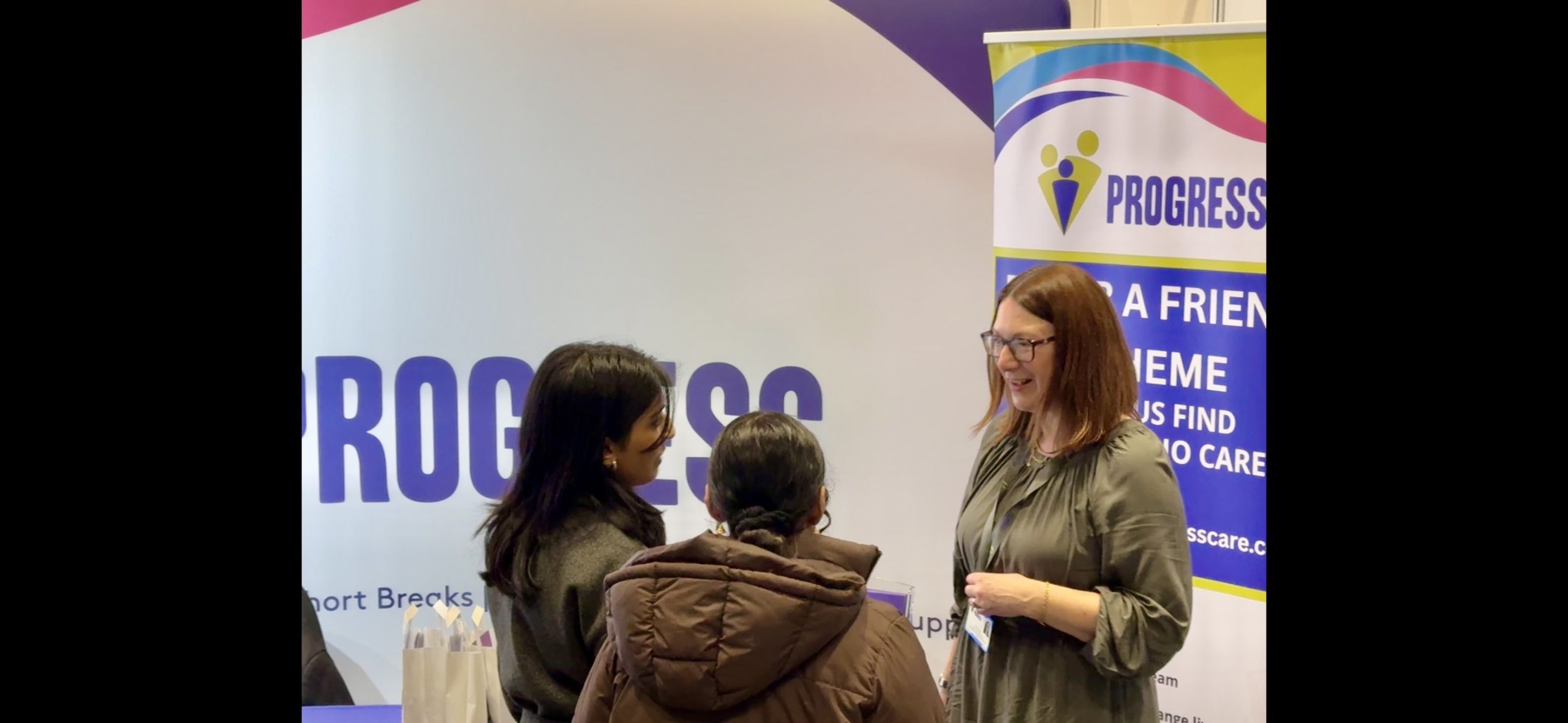
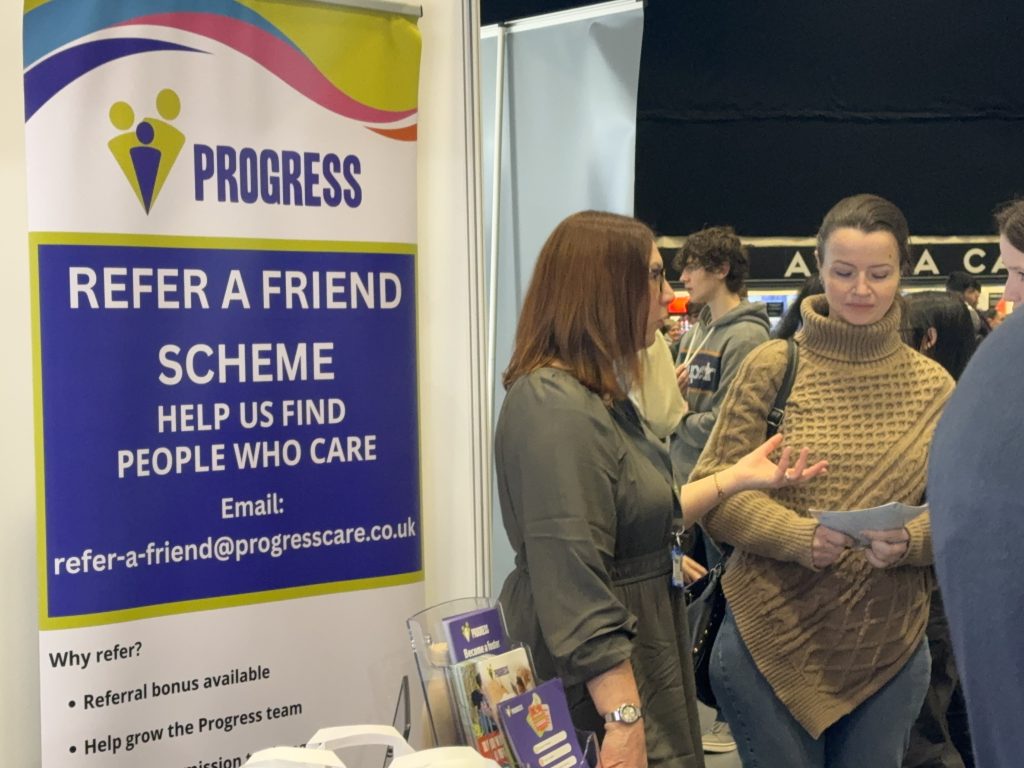
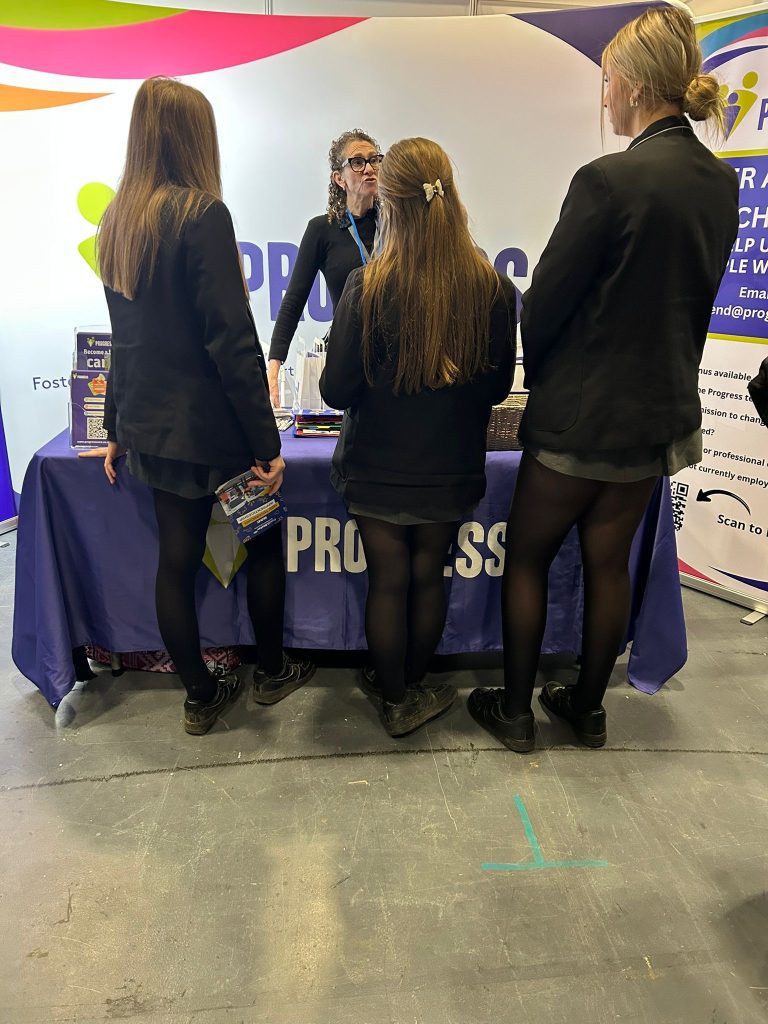
At Stand 16, opposite the National Health Service stand, Progress used the event not simply to recruit but to challenge perceptions about the care sector and to make the case that social care is one of the most future-proof careers available today.
A Career Hidden in Plain Sight
One of the biggest insights from the two-day event was how little many young people know about the care sector. Progress’ Corporate and Commercial team members spent much of the exhibition speaking with sixth-form students and GCSE pupils exploring their options.
“The biggest thing we realised,” Nic from the People and Culture team told me, “is that many young people simply don’t think about social care as a career.” For many students, care work conjures up a narrow image: supporting older people in residential settings. The sector, however, is far broader and more diverse than that.
At Progress, the work centres on supporting children and young people with complex needs, including autism, mobility challenges and other medical conditions. The role requires compassion, creativity and resilience, but it also offers something many careers cannot: the chance to make a tangible difference in someone’s life every single day.
Events like the National Apprenticeship Show are essential for raising awareness. “A lot of them don’t even realise organisations like ours exist,” a team member said. “Today is about highlighting the industry as a whole and showing them what they can actually be involved in. Supporting children, supporting young adults, and building a real career pathway.”
Breaking the Myths About Care Work
Ben, another member of the Progress People and Culture team, spent much of the event doing what he jokingly calls “selling the reality” of the sector. Care work, he explained to visitors, is often misunderstood. Many people assume the job is defined only by its most challenging aspects. The real story is far richer.
“You’re helping children have a childhood,” he said. “You’re playing games, doing activities, supporting them to communicate and grow. You’re helping them experience the things every child deserves.”
The work can be demanding, but it is also deeply rewarding. One moment Ben often shares with prospective recruits is the possibility of breakthrough moments, particularly when working with children with communication barriers.
“When a non-verbal child says their first word to you,” he said, “that’s the moment you realise how meaningful this work really is.” These experiences are what transform care work from simply a job into a vocation.
The Power of Lived Experience
Interestingly, many young people at the event already had some connection to the care sector. Some had siblings with additional needs. Others had relatives receiving care. A few even identified themselves as having special educational needs. These personal experiences often sparked deeper conversations about careers.
Nick says those with lived experience often become some of the most committed professionals in the sector. “They’ve seen what good support looks like,” she said. “And they want to be part of providing that support for others.”
For organisations like Progress, these connections highlight the importance of outreach. People who might naturally thrive in care roles need to recognise it as a viable career path.
Perhaps the most compelling argument for care as a career is its long-term stability. Across many industries, automation and artificial intelligence are reshaping the workforce. Tasks that once required human expertise are increasingly handled by machines or algorithms. Care work remains fundamentally human.
Empathy, trust, emotional intelligence and relationship-building cannot be automated. These are the core skills that underpin quality care. Ben believes this reality makes the sector one of the most resilient career choices available today.
“AI might replace many jobs, but care will always need people.”
This is also similar to what Progress’ Founder and CEO, Bal Dhanoa MBE, and our Managing Director, Claire Rogers, said about the future of AI in care and at Progress.
At the same time, demographic trends are dramatically increasing demand for care services. The UK population is ageing rapidly, with millions more people expected to require care and support in the coming decades. Improved understanding and diagnosis of conditions such as autism and ADHD also means more children and young people are being identified as needing specialist support.
Put simply, demand for skilled care professionals will continue to grow.
From Entry Role to Leadership
One of the most powerful messages shared at the exhibition was that care offers genuine career progression. Ben shared the example of a colleague who originally graduated with a media studies degree but decided against an unpaid internship and instead entered the care sector. Six years later, he had progressed to a senior leadership role earning more than £50,000 a year. Stories like this illustrate an important point. Social care is not just an entry-level job. It is a structured career with clear pathways into leadership, management and specialist roles.
At Progress, staff are supported to gain qualifications such as the Level 3 Diploma in Children and Young People’s Workforce while working. This means employees are not only earning but also building recognised professional credentials.
One subtle but revealing observation from the event was how young people imagine the world of work. Many students associate professional careers with suits, offices and rigid corporate environments. Care work offers something different. It is a dynamic, hands-on role where no two days are the same.
“You’re not sitting behind a desk all day,” Ben told visitors. “You’re active, engaging with young people, and helping them grow.”
For many students, this idea that work can be meaningful, energetic and deeply human was a refreshing alternative to traditional career paths.
Investing in the Next Generation of Care
The National Apprenticeship Show is ultimately about possibility.
For Progress, participating in the event was not simply about filling vacancies. It was about something much bigger: ensuring the long-term sustainability of the care sector. Future-proofing care means inspiring the next generation to see it as a meaningful, respected and rewarding profession.
It means showing young people that the sector offers not just employment, but purpose.
It also means ensuring that the children, young people and families who rely on care services will always have skilled, compassionate professionals supporting them.
Technology may transform many industries, but one thing remains certain. The need for care will never disappear. The challenge, and the opportunity, is making sure the next generation is ready to answer that call.
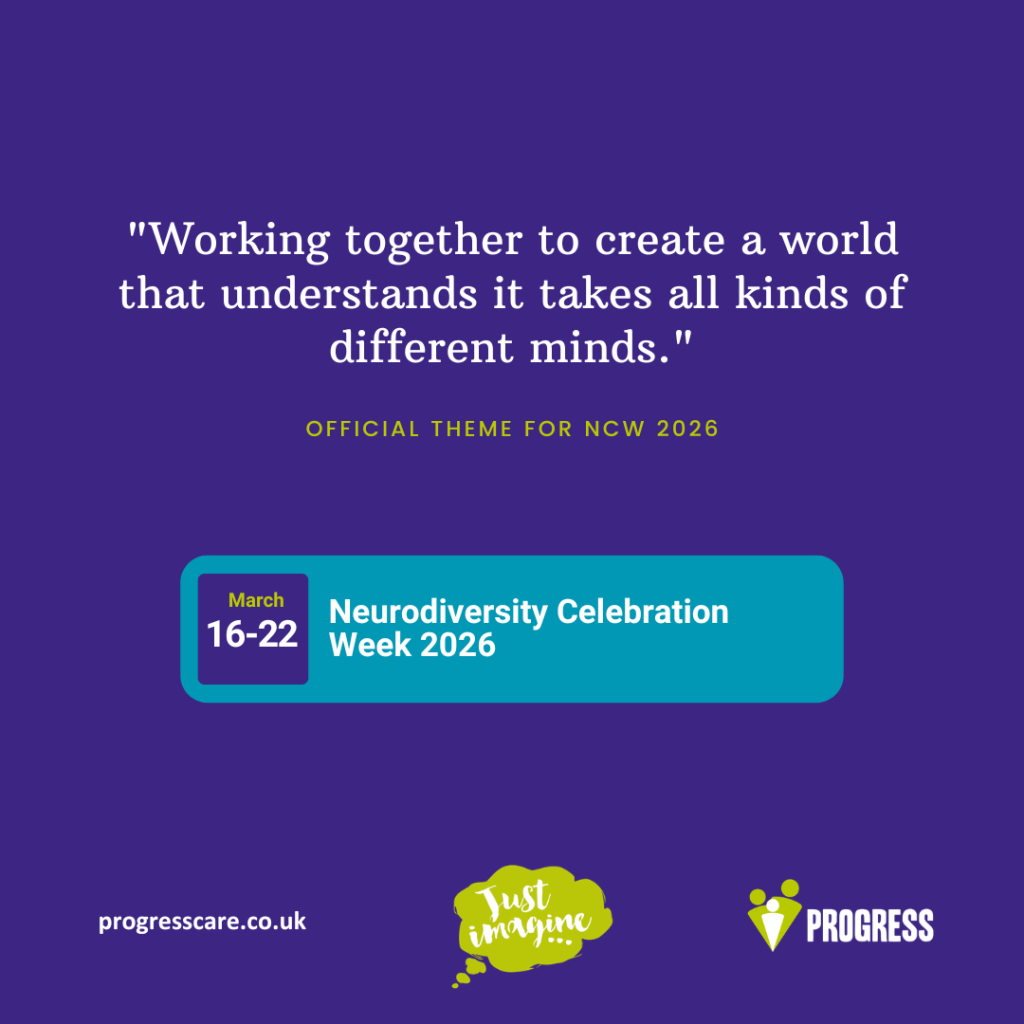
This week, from 16–22 March, Progress Care Solutions is joining organisations across the UK to celebrate Neurodiversity Celebration Week 2026, an annual initiative recognising and celebrating the many ways people think, learn, and experience the world.
At Progress, the week provides an opportunity to highlight the unique strengths of neurodivergent individuals and reflect on the organisation’s ongoing commitment to inclusion across its fostering, care, and support services. Neurodiversity celebrates the natural differences in human brains, including conditions such as autism, ADHD, dyslexia, and dyspraxia, and focuses on the talents, creativity, and perspectives these differences bring to communities, workplaces, and homes.
“Neurodiversity is about recognising and valuing the many ways people experience the world,” said Claire Rogers, Managing Director, Progress Care Solutions. “At Progress, we work with children, young people, and families every day, and we see firsthand how different ways of thinking bring incredible insight, empathy, and problem-solving skills. Neurodiversity Celebration Week is a chance to shine a light on these strengths and remind everyone that inclusion is a year-round commitment.”
Progress has been sharing stories and insights from staff and carers who have personal or professional experience of neurodiversity, demonstrating how understanding and support can transform lives. The organisation encourages its teams, carers, and the wider community to take part in activities, learn more about neurodivergence, and celebrate the contributions of neurodivergent people in every part of society.
“Every mind is different, and every mind has something to offer,” added Tina Bhardwaj, Progress’ Head of Children’s Services. “By recognising and supporting these differences, we can build a culture where everyone can thrive.”
For more information about Progress and its work supporting children, families, and carers, visit Progress website.
Progress is proud to be exhibiting at the National Apprenticeship Show West Midlands, taking place on 10–11 March 2026 at the CBS Arena in Coventry.
The event brings together employers, training providers and thousands of young people exploring their next steps in education and employment. Over the two days, the Progress team will be speaking with students, jobseekers and career changers about opportunities to build meaningful careers in health and social care.
Visitors to Stand 16 will have the chance to learn more about the wide range of opportunities available within Progress, including apprenticeships, career pathways in care, and flexible roles within our casual workforce.
Our team will also be offering advice to those considering a career in care, sharing insights into the rewarding nature of the sector and the many ways people can develop their skills while making a real difference in the lives of others.
Events like the National Apprenticeship Show play an important role in helping people explore future pathways and connect directly with employers. For Progress, it is an opportunity not only to promote careers in care but also to inspire the next generation of professionals who are passionate about supporting people to live independent and fulfilling lives.
If you are attending the event, we would love to meet you. Come and speak to the team at Stand 16 to find out more about how you could start your journey with Progress.
Progress Care Solutions mark International Women’s Day this week with celebrations at head office and a powerful reflection from Founder and CEO, Bal Dhanoa MBE, on her journey as a woman, leader and pioneer in the care sector.
Colleagues gathered at the Progress head office on Monday to celebrate the occasion with colourful decorations, balloons and cupcakes, creating a vibrant atmosphere to recognise the contributions of women across the organisation. The moment provided an opportunity to celebrate the impact women have had in shaping Progress over the past 25 years.
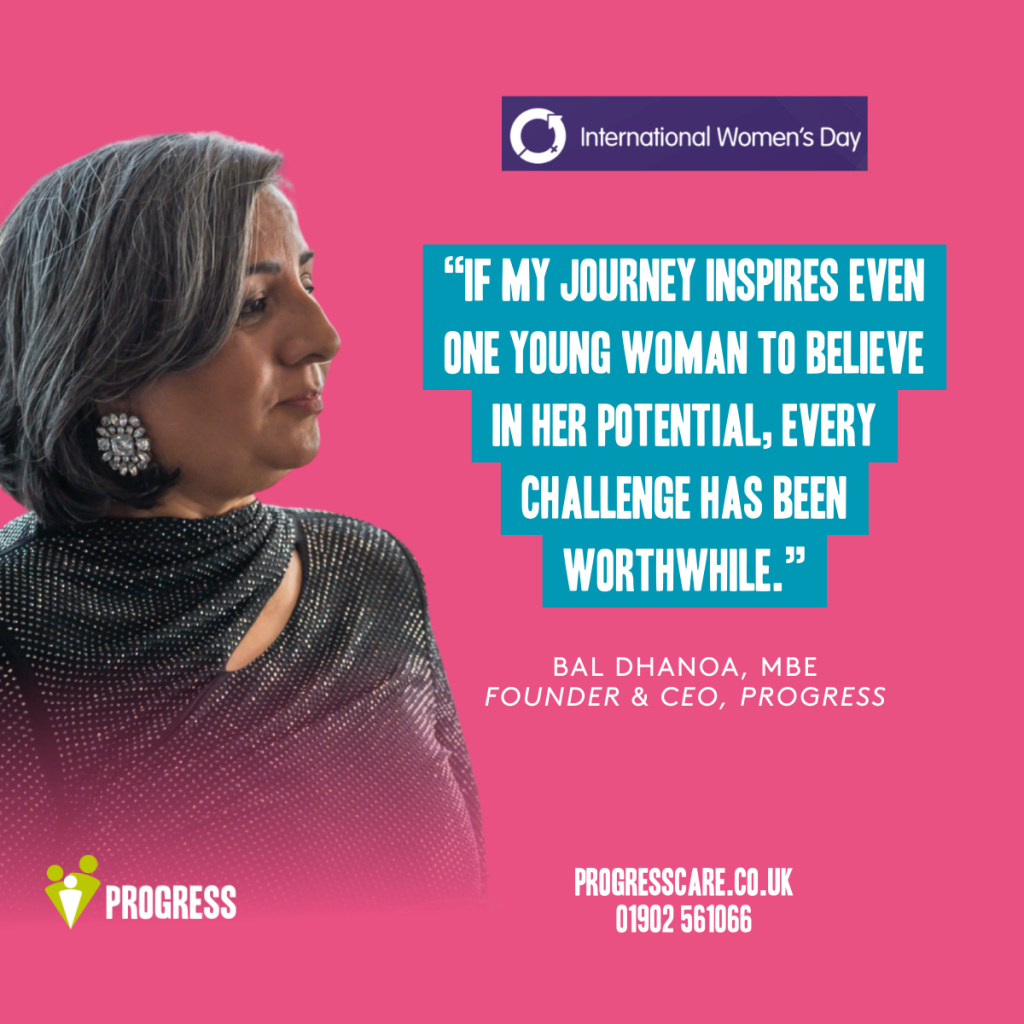
To mark the day, Bal Dhanoa MBE shared a personal articlereflecting on her remarkable journey, from growing up in Britain as part of the first generation of British-born children of Indian heritage to building Progress into a leading care provider supporting children, young people and families.
In her reflection, Bal speaks about growing up between two cultures and balancing family traditions with her own ambitions. She recalls a childhood shaped by the music and culture of the 1970s alongside the responsibilities placed on young women within her community.
Education became a turning point in her life. It opened doors to a career in social care where she discovered a deep passion for supporting vulnerable children and families. Over time, that passion grew into a vision that would lead to the founding of Progress.
The early years of building the organisation were challenging. Bal balanced family responsibilities, a full-time career and significant personal risk to establish specialist fostering services and children’s homes at a time when opportunities for women in leadership were limited.
Despite the challenges, her determination to provide the highest standards of care never wavered. Over the years, that vision has grown into the organisation Progress is today, built on compassion, resilience and a commitment to excellence.
Reflecting on her journey, Bal highlighted the importance of resilience, education and believing in one’s own potential.
“If my journey inspires even one woman to believe in herself and pursue her ambitions without boundaries, then every challenge along the way has been worthwhile,” she said.
Women continue to play a vital role across every part of Progress, from frontline care teams and managers to senior leadership. Their dedication and professionalism remain central to the organisation’s mission of supporting children, young people and families.
International Women’s Day offered colleagues the chance to celebrate those contributions and recognise the many women whose work continues to shape the future of Progress.